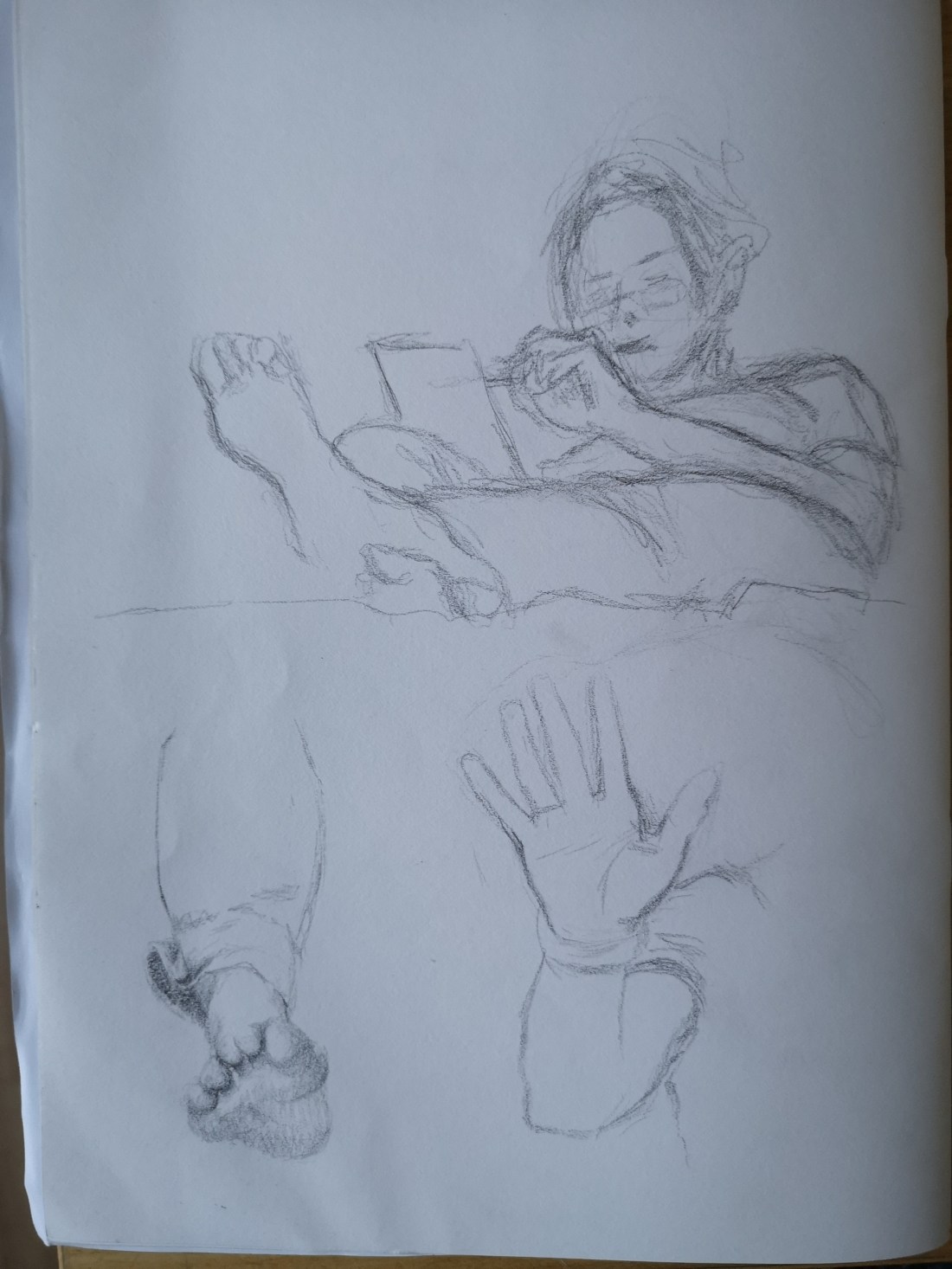
I laid down with a mirror at my feet to practice foreshortening. I found this really difficult mostly because I had to prop myself up at an awkward angle to complete the task. I also found my pose changed as I became more tired so the outcome was very rough. I therefore also did a couple of quick sketches of just my lower leg and foot and then outstretched hand and arm.
At first the foreshortening was not very apparent as I just looked in the mirror, but as I started to look more closely and sketch out the proportions the foreshortening effect became much easier to see.
My sketches are below.
In seeking examples of foreshortening, immediately what came to mind were two particular paintings I saw as a a young teenager and which both I’m sure influenced me in my being drawn to art.
The first I saw was Christ of Saint John of the Cross, by Salvador Dali. I saw it at Kelvingrove Art Gallery in the 80’s aged around 14. I was on one of my annual family holidays to visit relatives and a trip to the local gallery was just something nice to fill the day. I never expected to see this painting, but I remember it took my breath away it was at the end of one of the landings and was absolutely huge, you could only see the whole image from a distance, therefore close to you had to look up and it gave the impression of Christ looking down upon you. It was so effective in giving that perspective. In reading further for this research, I found out that Dali used a stuntman as a model hanging in this position to get the foreshortening accurate, which is incredible in its own right.
Image below.
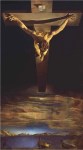
Salvador Dali, Christ of Saint John of The Cross, 1951 (Oil on canvas)
The second painting that came to mind was by an artist I came familiar with whilst studying art at A’level. The painting was given as a good example of foreshortening and I then saw it in the flesh at the National Gallery, London. My understanding was that it was an early example of foreshortening by Caravaggio who is noted for having used more realistic representations of bible scenes which was almost revolutionary at the time.
Image below.
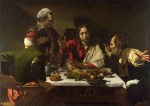
Carravagio, Supper at Emmaus, 1602 (Oil on canvas)
In both paintings I feel the use of foreshortening is what makes them, if you could imagine either with slightly different poses where foreshortening was not used they would not have the same impact – the foreshortening gives an additional dimension and therefore enhances the realism.

 Deborah McAulay