I was asked to look closely at Odilon Redon, Two Trees, C 1875 (charcoal on paper), noting his expressive use of tone to produce an ambient scene and then to find further work by the artist and discuss the atmospheric potential of tone in my blog.
I had never heard of this artist before now, but a brief google search produced a lot of information and images of dream and nightmare like scenes and subjects. On further exploration I learned that he was a ‘symbolist’ and most interested in using his imagination and unconscious thought to drive his art work even when drawing or painting from life.
I used the OCA online library to search and study some of his artwork in more detail.
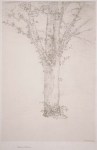
Fig 1, Odilon Redon, Tree, 1892 (lithograph on chine colle)
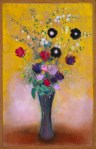
Fig 2, Odilon Redon, Vase of flowers, 1916 (pastel)
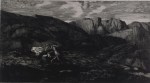
Fig 3, Odilon Redon, Fear, 1866 (etching)
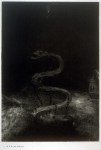
Fig 4, Odilon Redon, IX “… et le lia pour mille ans.” (lithograph)
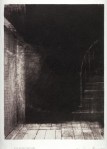
Fig 5, Odilon Redon, Je vis une lueur large et pale, (lithograph on chine appliqué)
Work such as fig 1 and fig 2 have less tone, producing a more subtle and gentle image without losing any sense of the 3 dimensional form. Each of these images also focus more attention on the detail of the subject, everything is visible to the eye of the viewer the second image also uses soft and pleasing colours to evoke a sense that this is a nice and pleasant subject.
The other 3 images are much darker in tone and whilst there remains enough detail, the use of dark seems to draw the viewer in – it is necessary to look for longer and more intently to work out the subject of the images, and there is a lot left to the imagination. For me, I felt that this gave more drama and atmosphere. In addition fig 3 and 4 gave drew more negative emotion, also suggested in the titles. The landscape in figure 3 is well detailed, but the use of tone gives a feeling of a very imposing and isolated landscape in the midst of nowhere. Fig 4 on the other hand is much less detailed but gives enough to tell you this is a chained snake and to show that it appears to be screaming or in some kind of distress. Both images I feel tap into the kinds of emotions and vulnerabilities that we prefer to keep hidden due to the unpleasant or unknown effects they may have on us.
Fig 5 is equally as dark, but I felt offered a bit more hope and possibility. I think this may be because of the use of tone to suggest light going into dark. The light also extends to give a bit of a view of stairs and offers a sense that the light may follow as you enter further into the image. It still gives a dramatic effect and again, leaves a sense of the unknown and leaves your imagination to work things out.
Reflecting on what I have seen, I realise that tone can be used effectively to give a suggestion or hint of something as well as to provide clear shape and definition; tone can get the viewer to think about what is there or give them all of the information and a true likeness. It can also add to the emotional element of art and be used to draw on or invoke a particular feeling by creating darkness and giving just a hint of the subject or the scene and leaving the viewer to think about what is happening around and within.
 Deborah McAulay