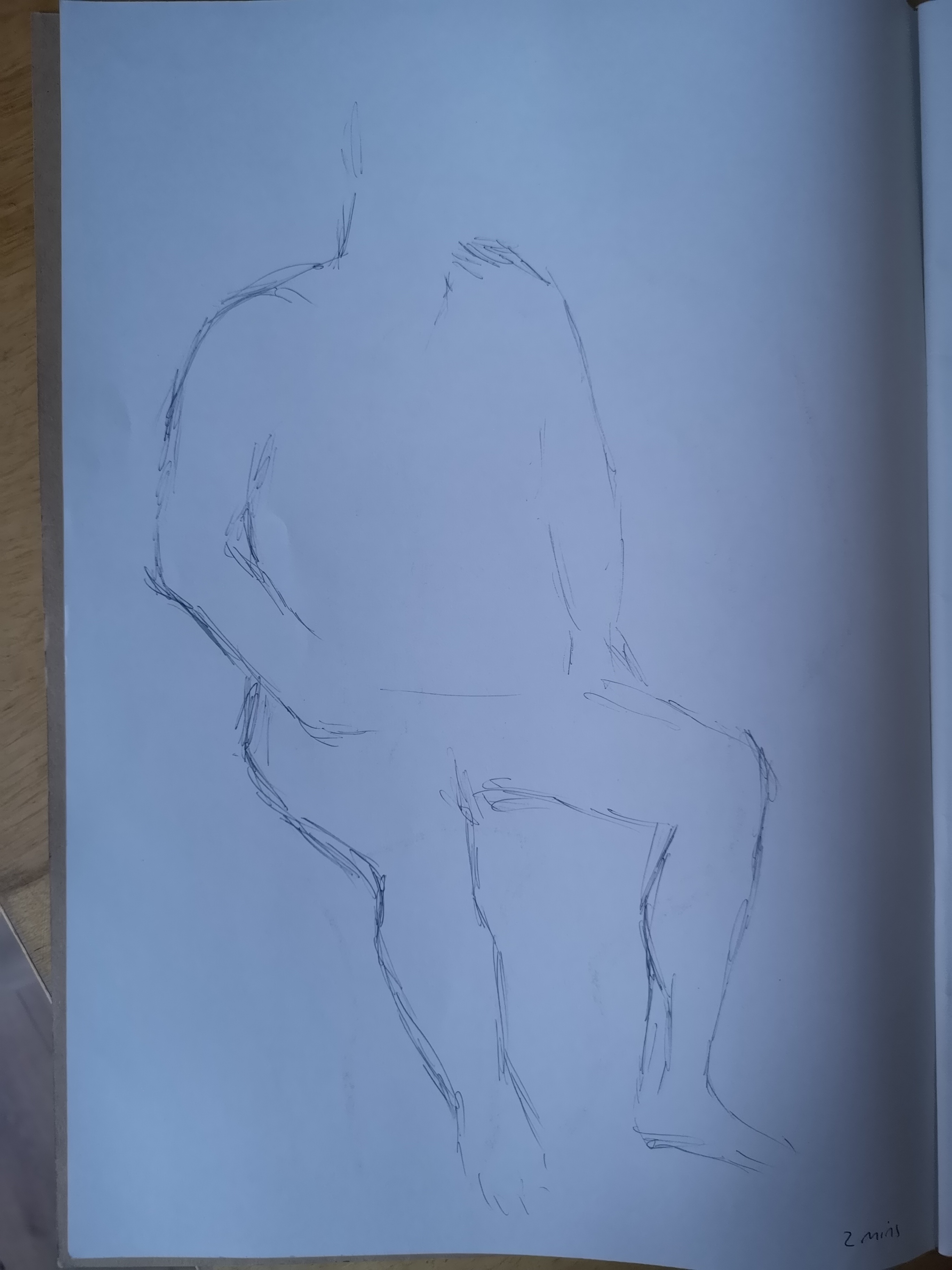
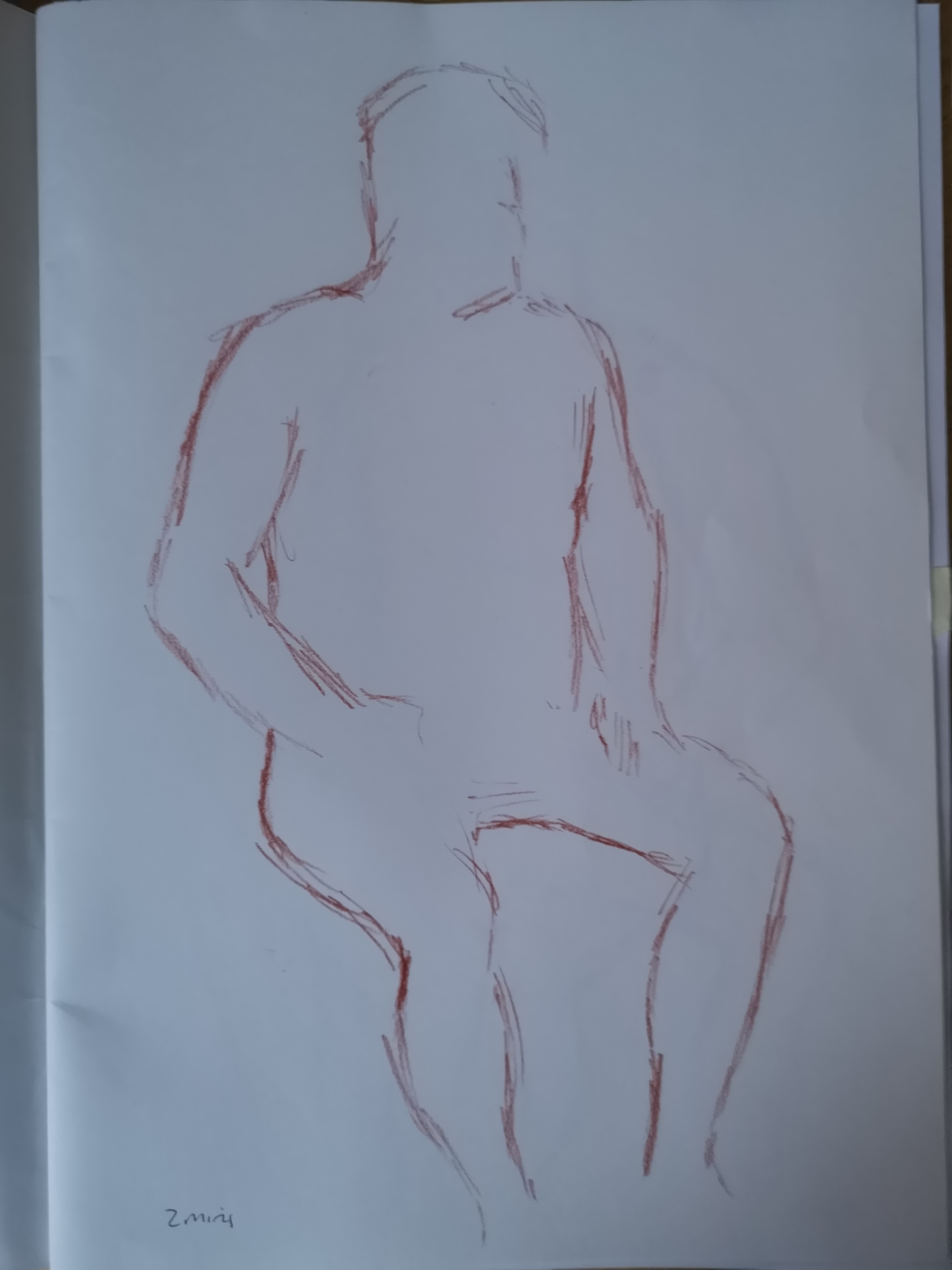
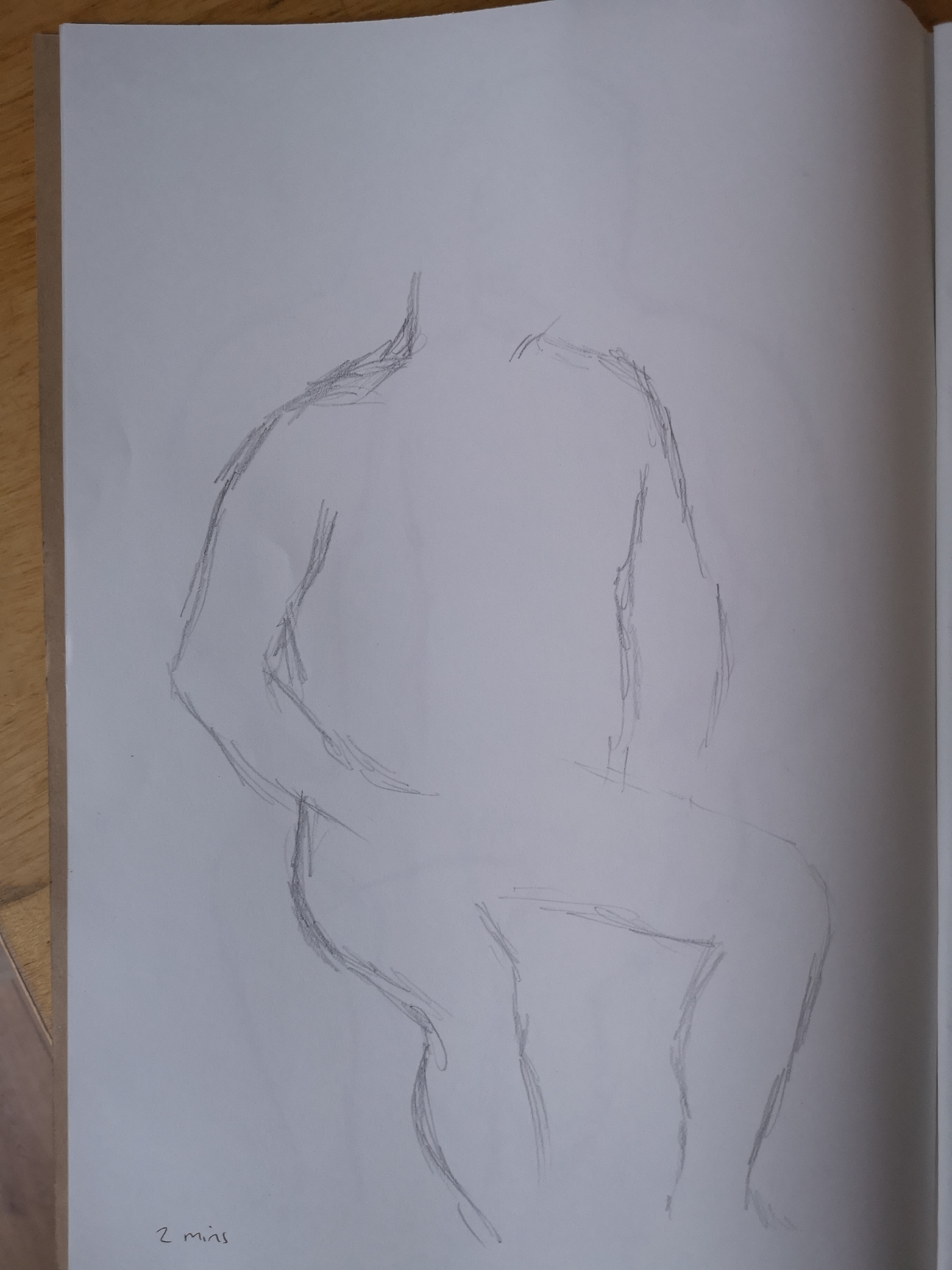
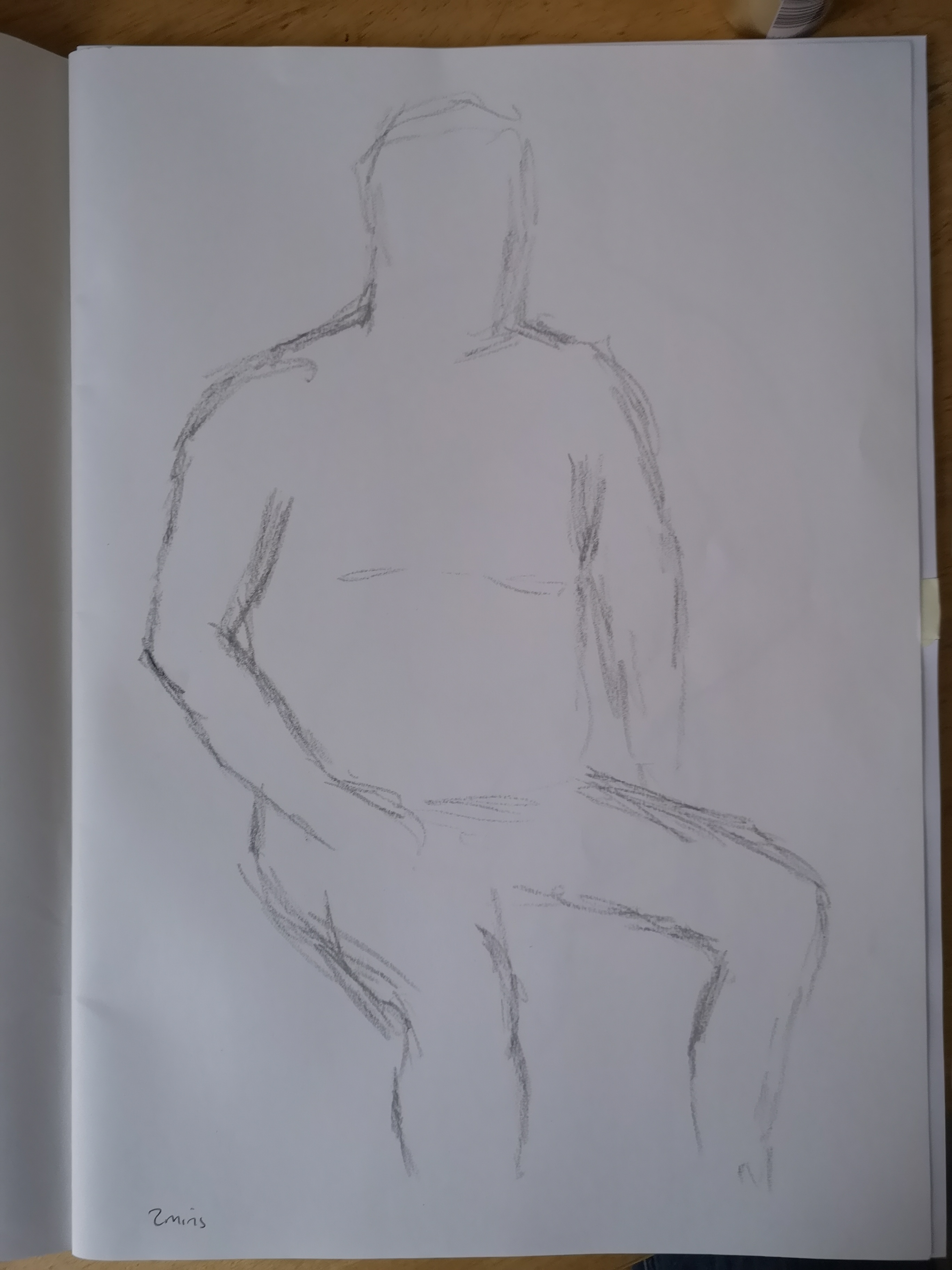
Drawing Skills 1: Pt 4; Project 3 Form – Ex 2 – Essential elements

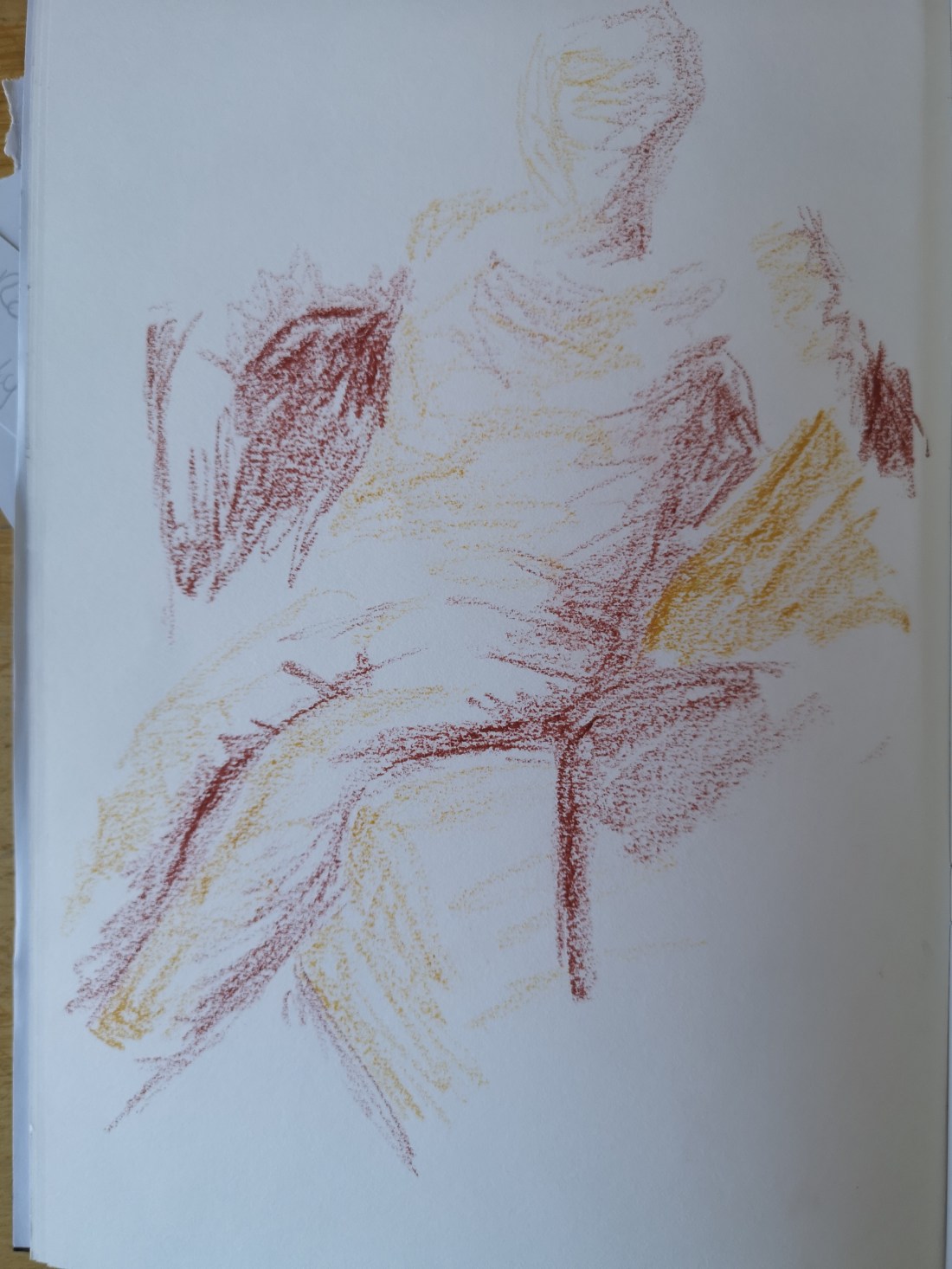
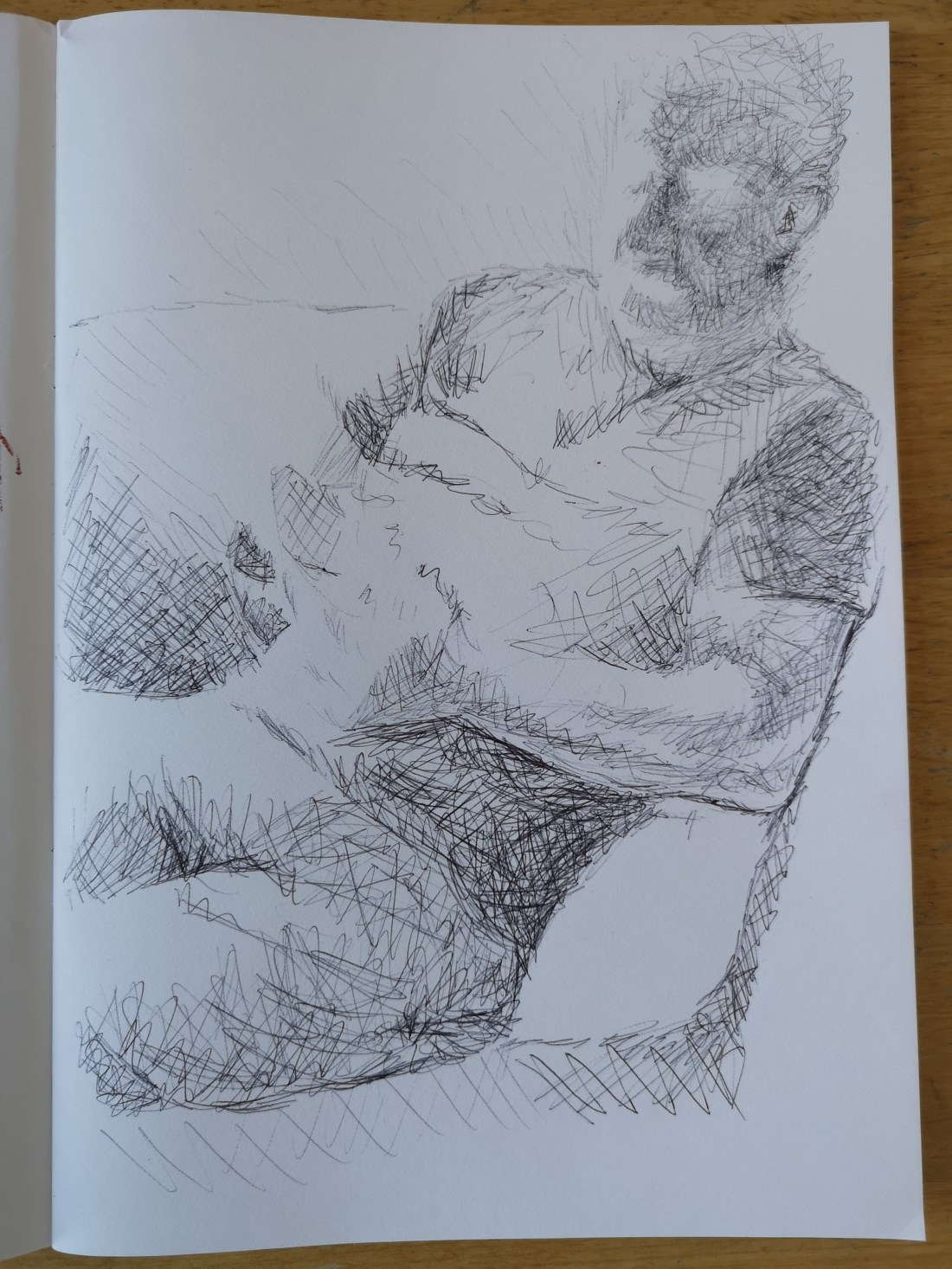
With this exercise I just took the opportunity to draw my model as it arose rather than asking them to pose, and therefore completed this over a few days.

Therefore each of the sketches is from a natural position, (with the model often moving) and completed very quickly.

I tried to concentrate on form and tone, and to ignore outlines, but generally used line and cross hatching to do this, trying different mediums to achieve this.

dav

Graphite pencil on paper

dav

Graphite pencil on paper

dav

Oil pastel on paper

61453D31-815B-40FF-BAB7-BE2185347FA0.jpeg

Ball pint pen on paper

0707E116-45C8-4304-9F79-9EF8169FCB50.jpeg

Marker pen on paper.

When I had completed the sketches, I realised that in drawing people I seem to be much happier with a quite abstract approach than I am when drawing landscape. I find this quite interesting as it seems I am less concerned with the level of detail I achieve and happier to just make suggestive marks for people whereas the opposite is true in landscapes. I struggle to understand this as I desperately want to achieve the same approach to landscapes and am drawn to artists who do achieve this.

My only conclusion is that my confidence in drawing people is greater due to more experience with this. This reinforces my need to practice more in the subjects I’m not confident in drawing, but it also helps to inspire me to continue my current practice in the belief that I can improve and develop my techniques.


Drawing Skills 1: Pt 4; Project 3 Form – Ex 1 – Basic shapes

My model was not good at staying still, lots of fidgeting so I rushed through. I also found this exercise difficult as I wasn’t really sure of what was being asked, but I just tried to concentrate on the general large shapes and the angles of these, rather than small details which I hope I achieved. There was lots of foreshortening potential – fingers, legs, shoulders, arms, feet. I find it much harder to judge foreshortening with a live model as the angle always looks like it is sloping towards you but is actually much more acute and shorter When translating this onto the paper.

I only completed 3 drawings with more or less the same pose but from different angles. 

1E7BBF3E-661A-4F17-8F01-1C6B83DF9345

Conte pencil on paper

dav

Ball point pen on paper

dav

Graphite pencil on paper

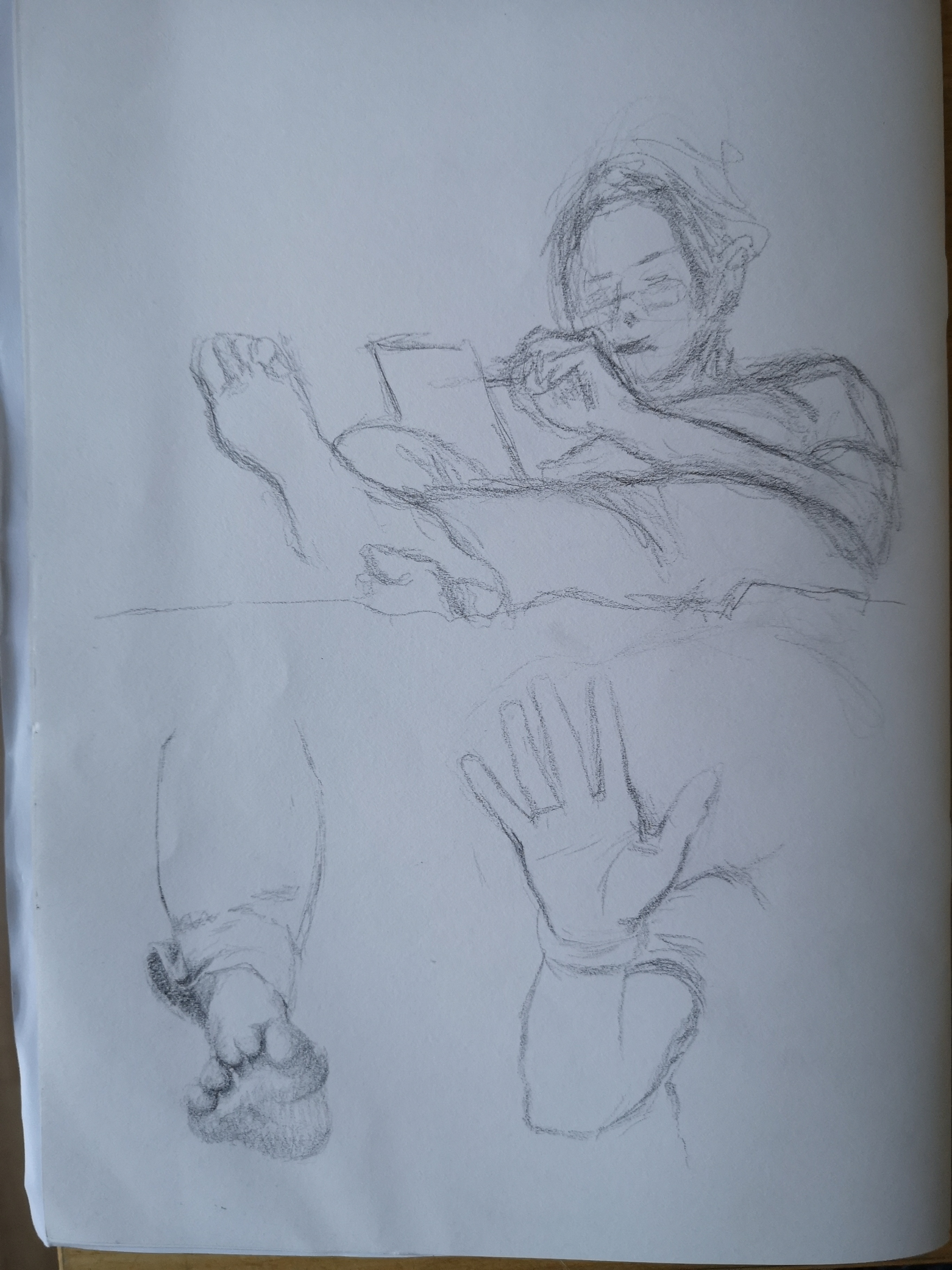
Drawing Skills 1: Pt 4; Project 2 Proportion – Research point – Foreshortening

I laid down with a mirror at my feet to practice foreshortening. I found this really difficult mostly because I had to prop myself up at an awkward angle to complete the task. I also found my pose changed as I became more tired so the outcome was very rough. I therefore also did a couple of quick sketches of just my lower leg and foot and then outstretched hand and arm.

At first the foreshortening was not very apparent as I just looked in the mirror, but as I started to look more closely and sketch out the proportions the foreshortening effect became much easier to see.

My sketches are below.

dav


In seeking examples of foreshortening, immediately what came to mind were two particular paintings I saw as a a young teenager and which both I’m sure influenced me in my being drawn to art.

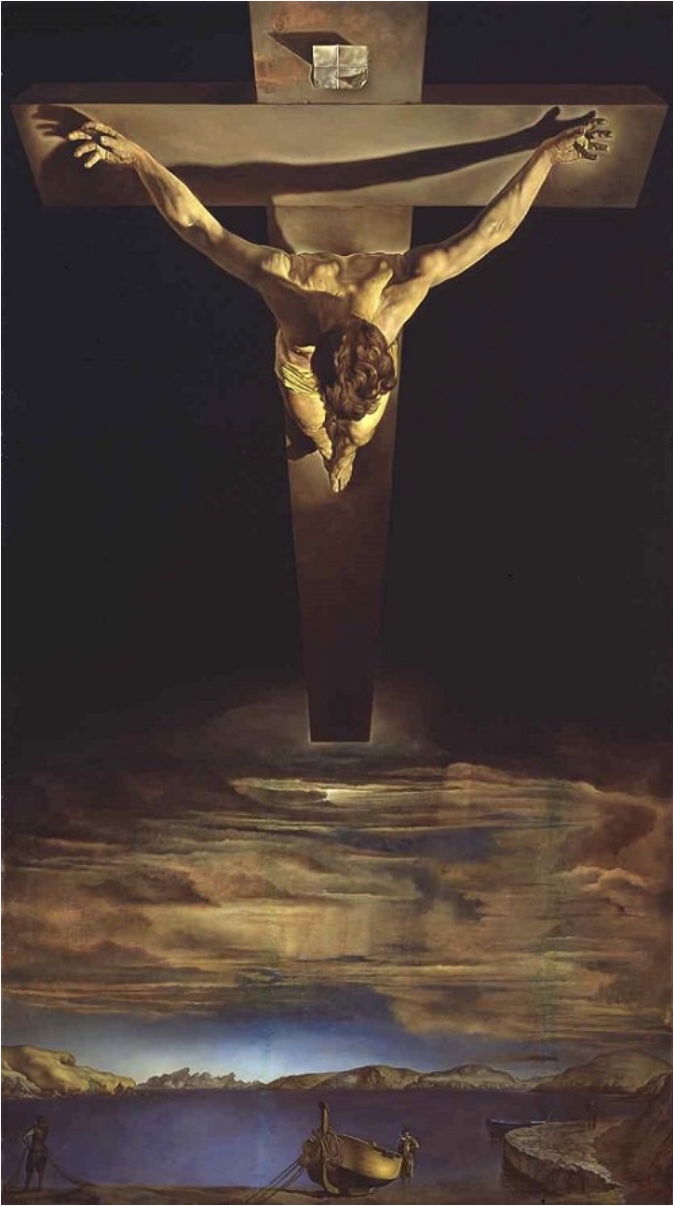
The first I saw was Christ of Saint John of the Cross, by Salvador Dali. I saw it at Kelvingrove Art Gallery in the 80’s aged around 14. I was on one of my annual family holidays to visit relatives and a trip to the local gallery was just something nice to fill the day. I never expected to see this painting, but I remember it took my breath away it was at the end of one of the landings and was absolutely huge, you could only see the whole image from a distance, therefore close to you had to look up and it gave the impression of Christ looking down upon you. It was so effective in giving that perspective. In reading further for this research, I found out that Dali used a stuntman as a model hanging in this position to get the foreshortening accurate, which is incredible in its own right.

Image below.

7A18E173-B43F-493F-9C81-C441C58DB628.jpeg

Salvador Dali, Christ of Saint John of The Cross, 1951 (Oil on canvas)

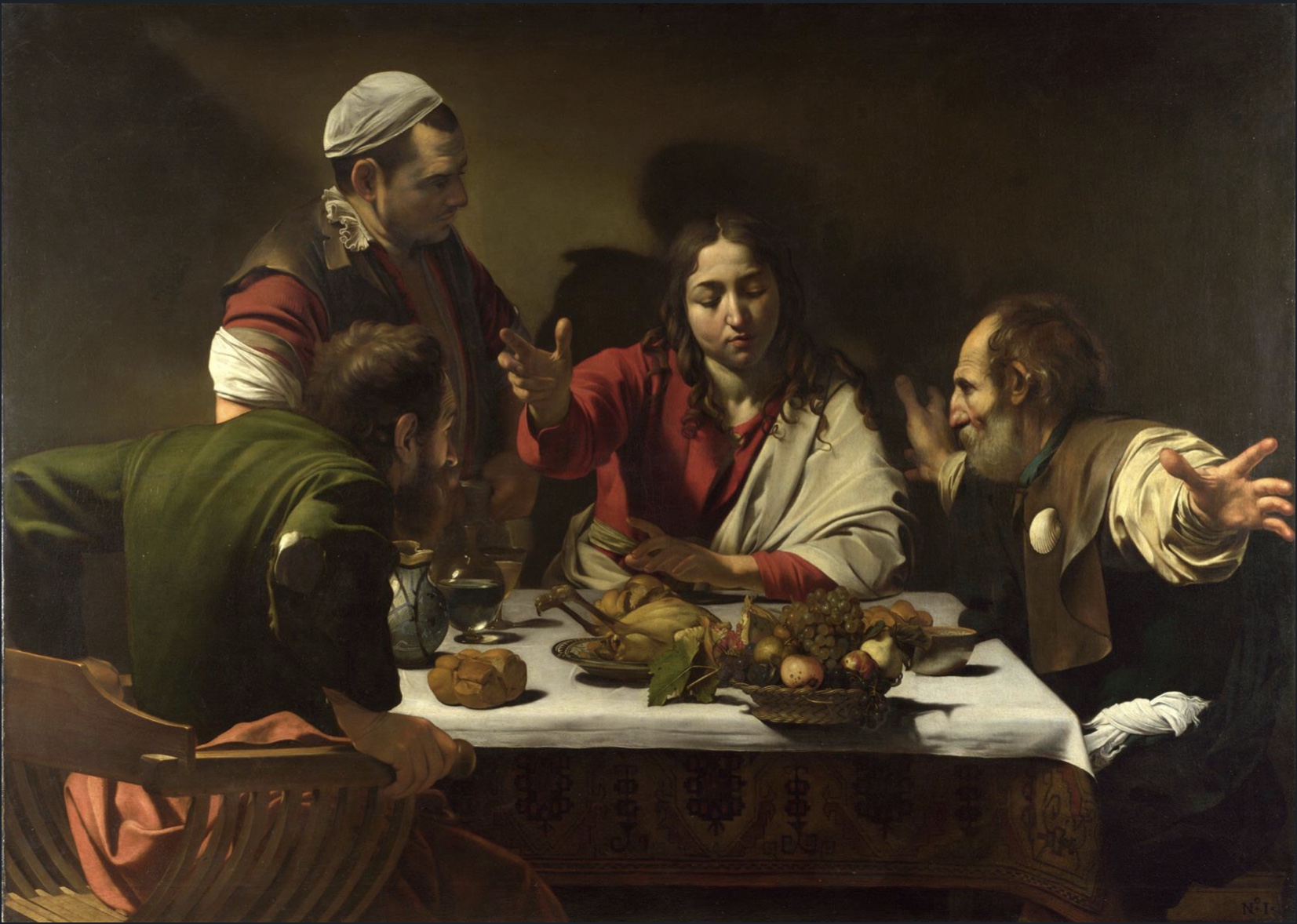
The second painting that came to mind was by an artist I came familiar with whilst studying art at A’level. The painting was given as a good example of foreshortening and I then saw it in the flesh at the National Gallery, London. My understanding was that it was an early example of foreshortening by Caravaggio who is noted for having used more realistic representations of bible scenes which was almost revolutionary at the time.

Image below.

50EB53E1-B7C8-4E97-9110-CD0F8AEEA87F

Carravagio, Supper at Emmaus, 1602 (Oil on canvas)

In both paintings I feel the use of foreshortening is what makes them, if you could imagine either with slightly different poses where foreshortening was not used they would not have the same impact – the foreshortening gives an additional dimension and therefore enhances the realism.


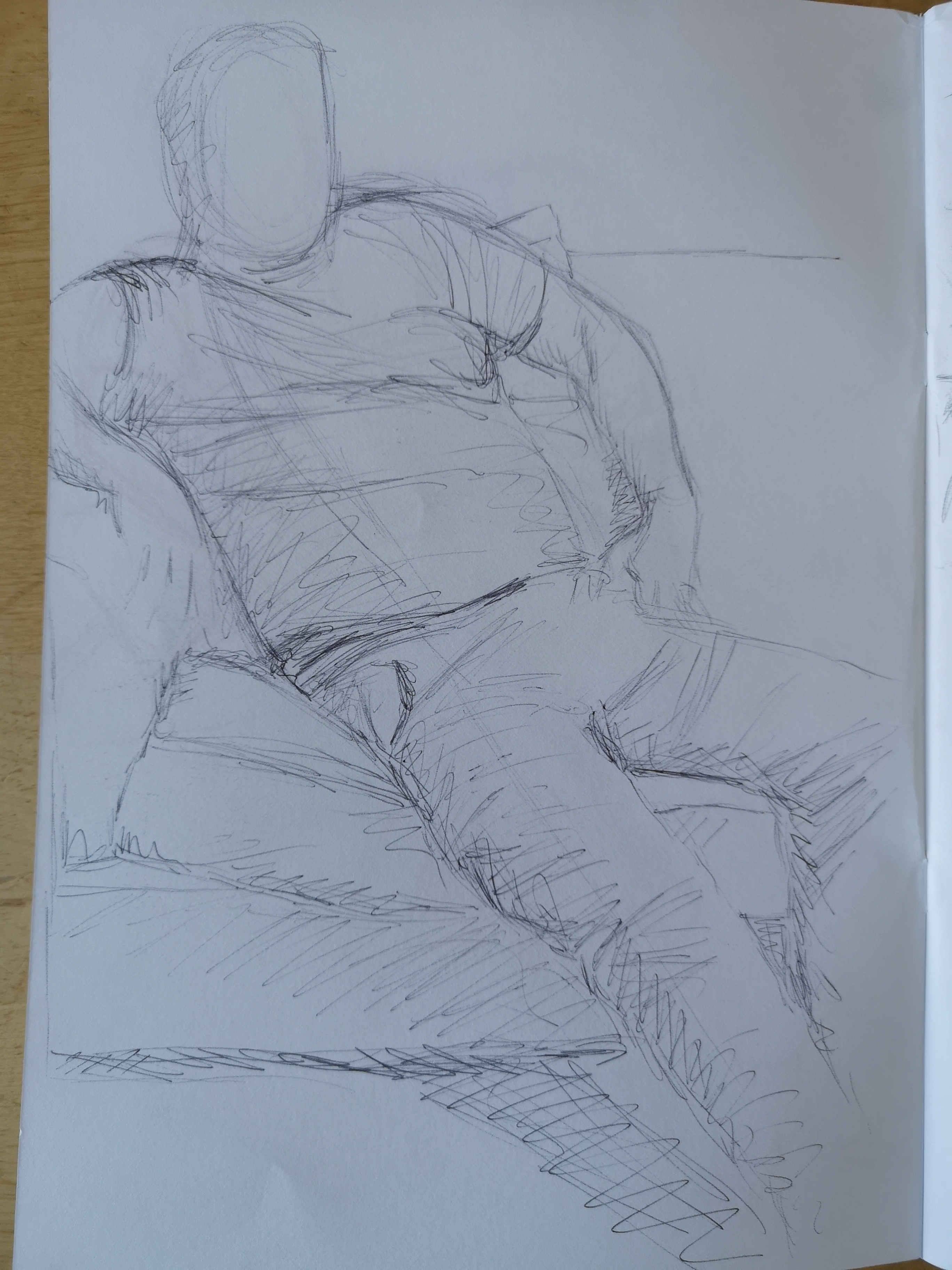
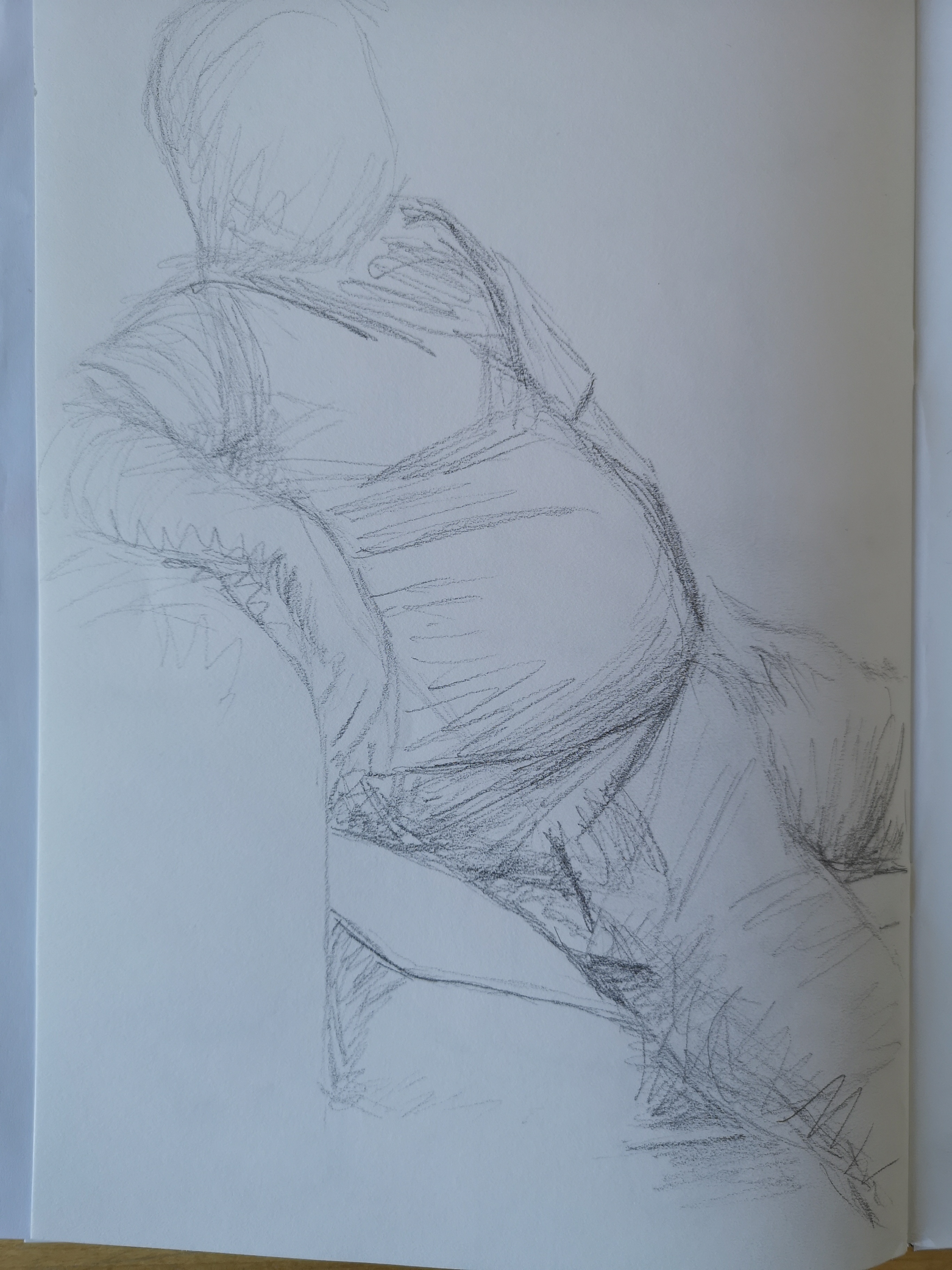
Drawing Skills 1: Pt 4; Project 2 Proportion – Ex 2 – Longer study

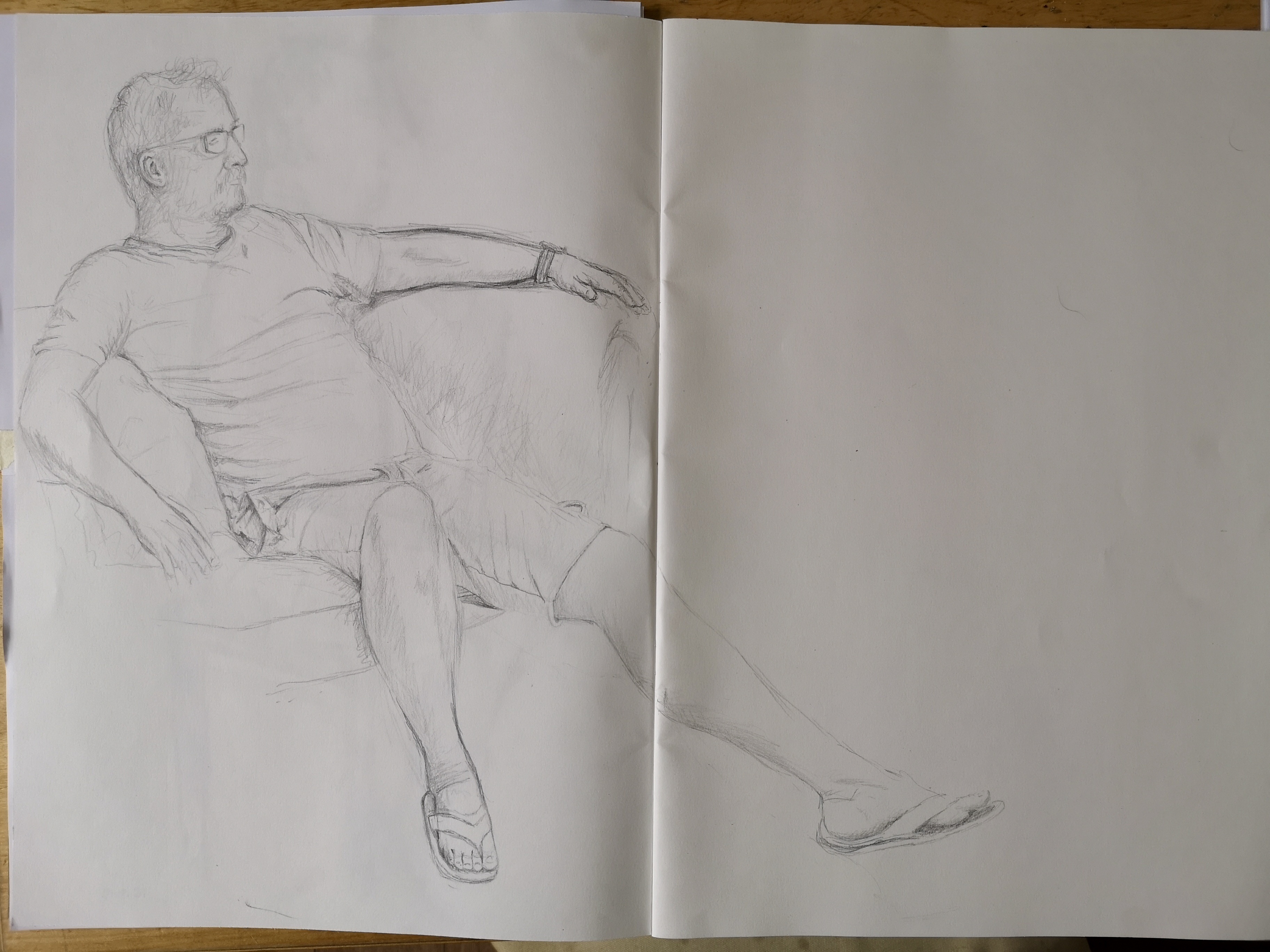
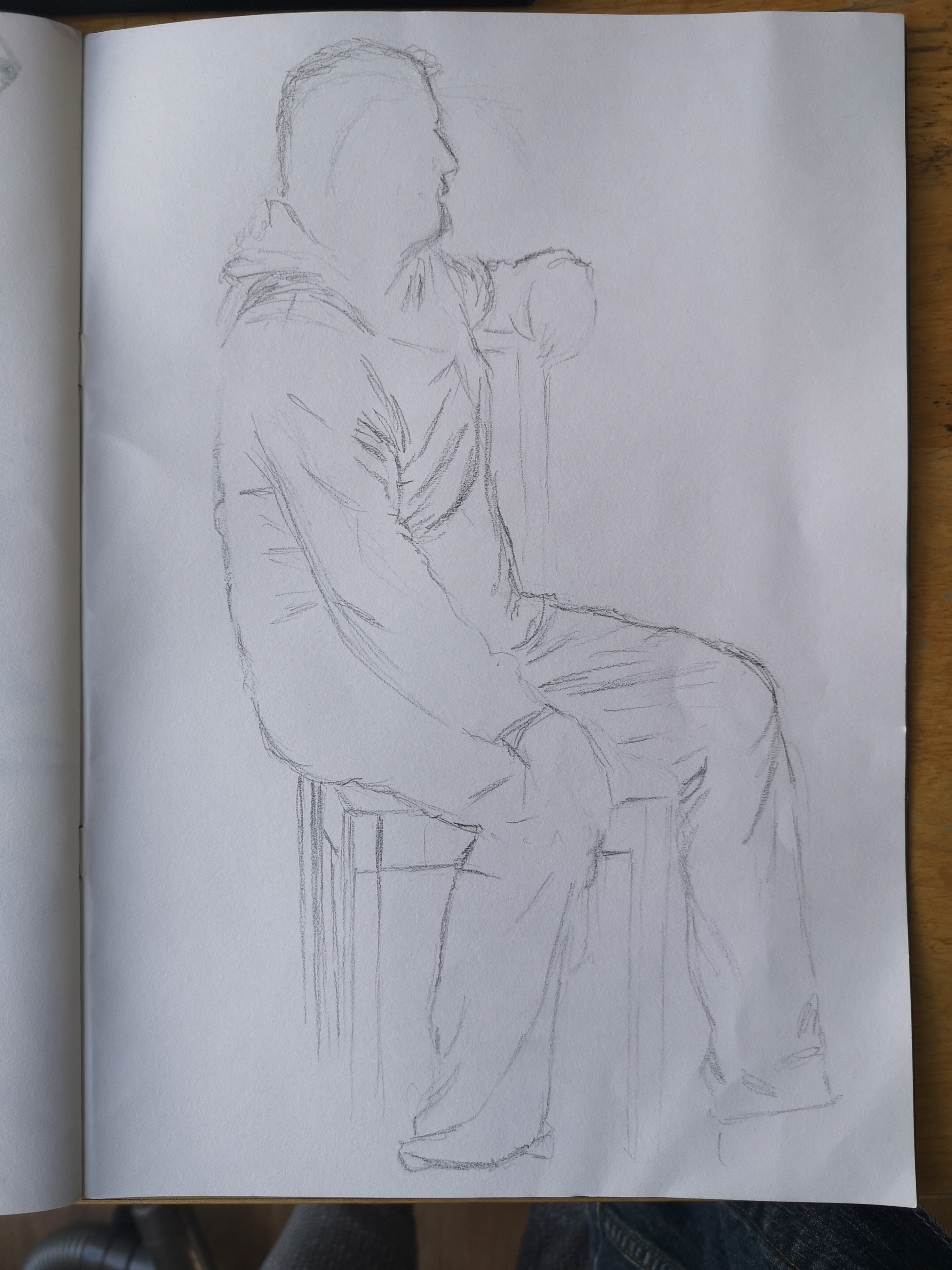
For this exercise I used pencil; I like pencil and thought for a longer study it would be best as could help with more detail. I don’t feel I’ve used pencil very much in this course.

My model sat in a comfortable position watching television, we agreed this would be easiest to hold for such a long period, although again breaks were given.

I first tried to place the outer most parts of his main features as suggested to get sense of the scale of the image. I then worked from left to right gradually adding more detail once I was happy with positioning. I did make a few mistakes but corrected these as I went along. Again I had the sketchbook resting on a board on my lap, but this time I made sure to lift the board as I progressed over the page to check scale and review intermittently, as it was a longer study I had time to do this. I ensured I also added background to place the sitter in context so as not sitting in mid air. I was generally happy with the outcome, felt it went well on the whole. Looking at it now (day after) I see that the right foot is out of proportion, I had some difficulty with this whilst drawing but thought I’d corrected it.

dav

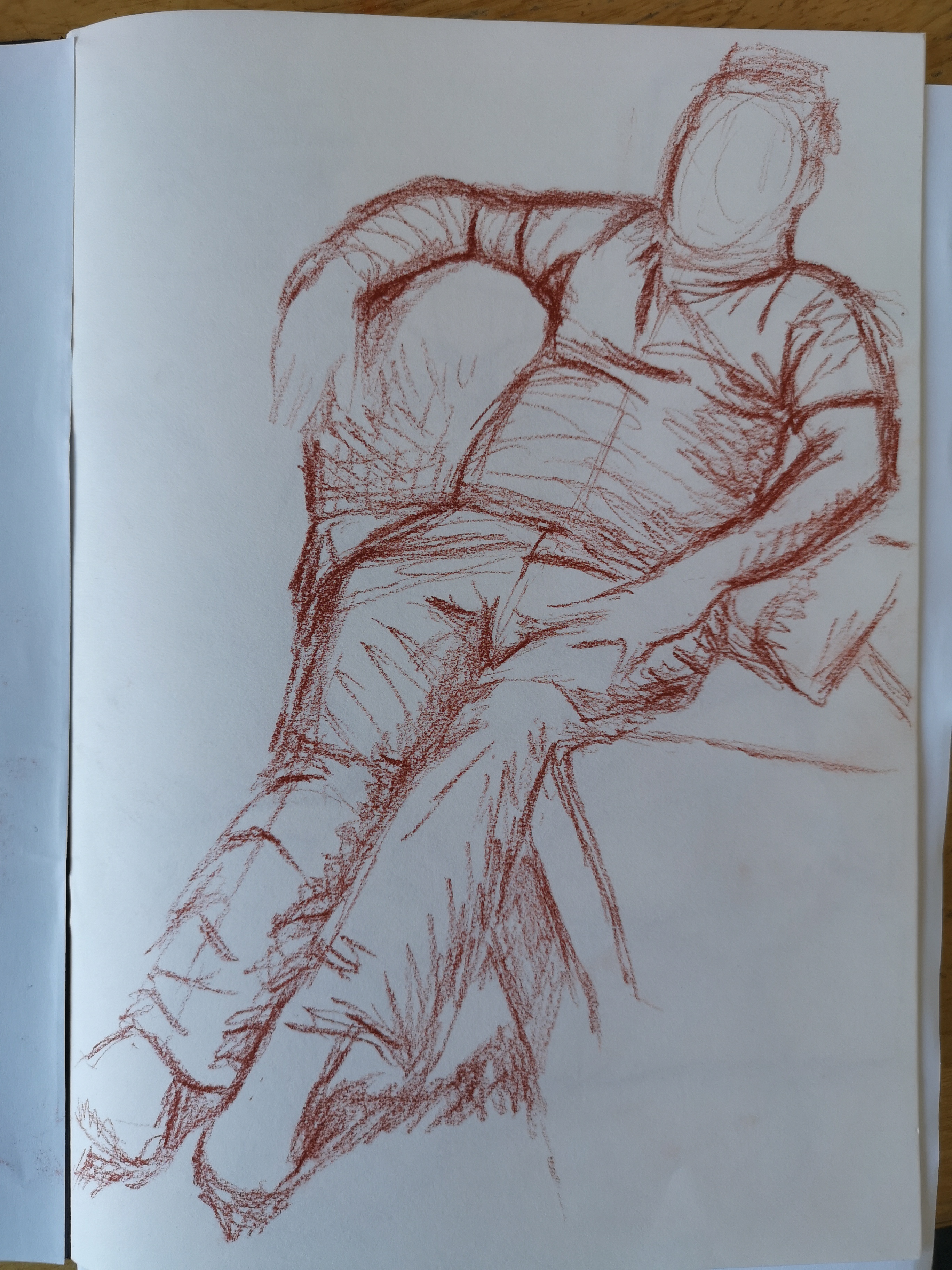
Drawing Skills 1: Pt 4; Project 2 Proportion – Ex 1 – Quick sketches

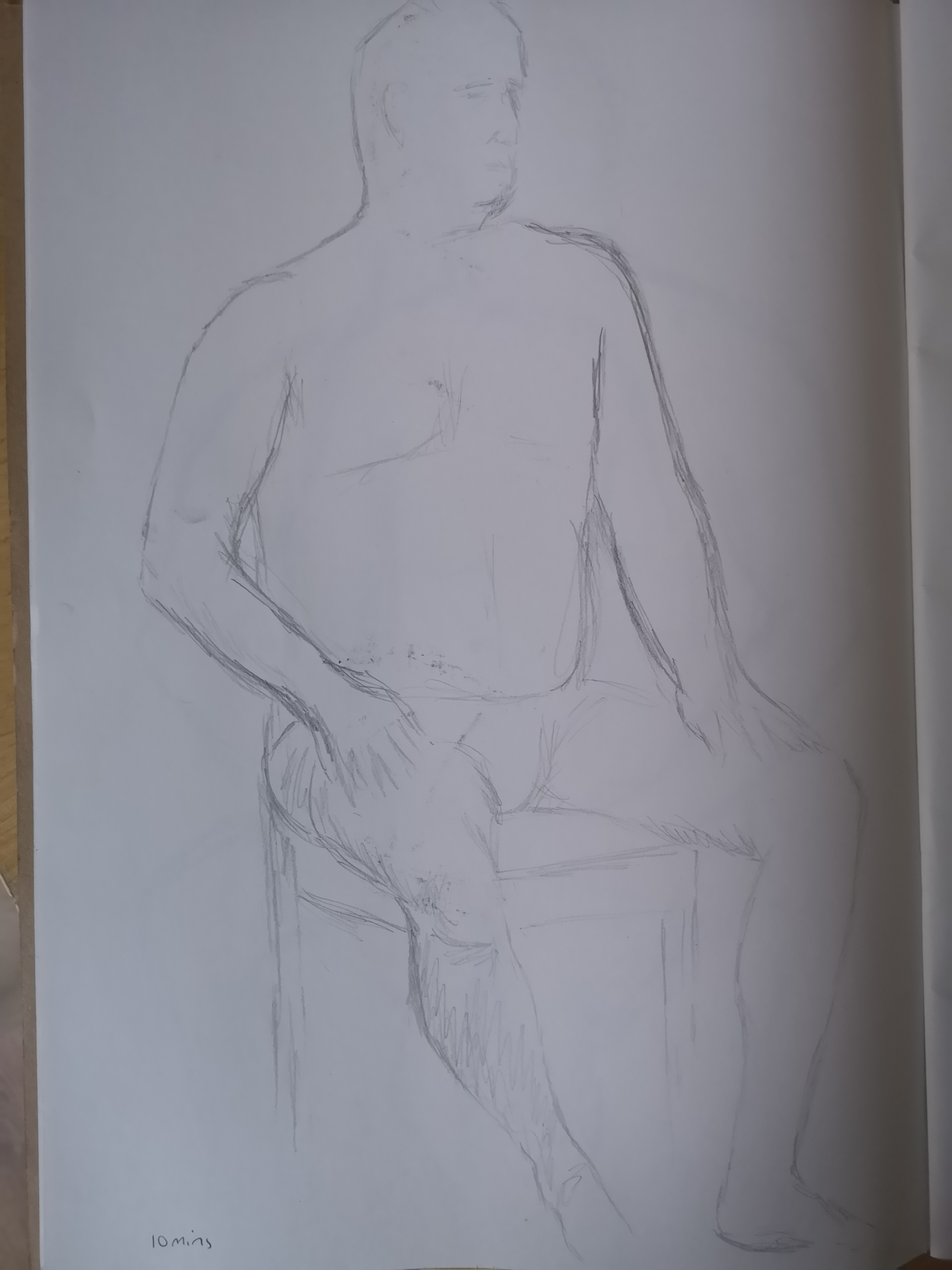
I found this more challenging than I thought I would. I am experienced in drawing this subject, but doing very quick studies was really challenging. Additionally, normally I would start my sketch at the head, which was not recommended in the exercise. I tried starting at the middle with somewhat better results in terms of getting proportions better early on, all of the sketches looked more or less the same but a few were much better.

I also found that working so quickly left me little time to review what I was doing, although I tried to look carefully at the proportions and relative space etc. I think I was also concerned for my model being uncomfortable and I didnt want to keep him too long as he was doing me a favour. He also became quite restless at times, I realise that even 5 or 10 minutes is a very long time to sit so still.

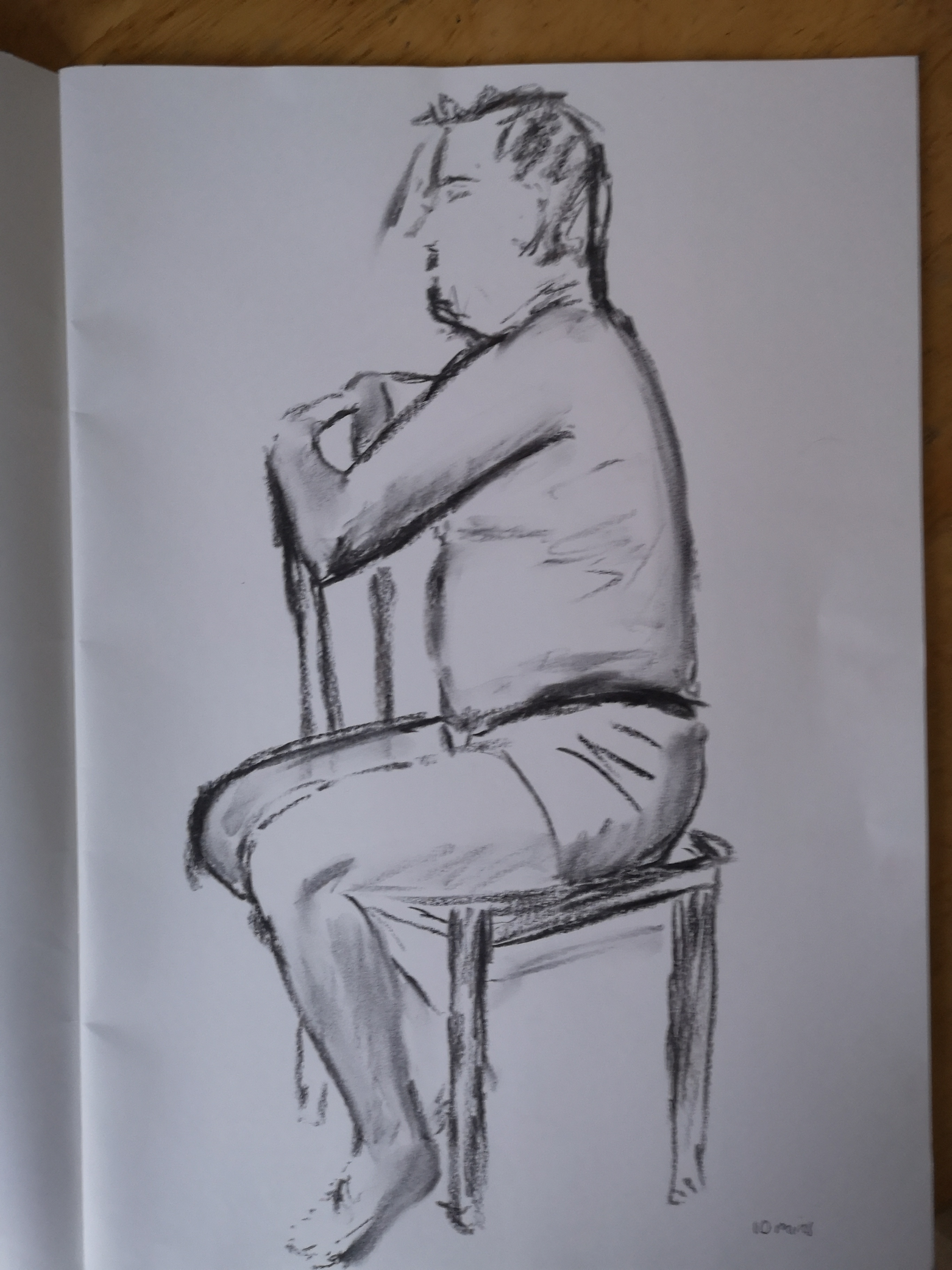
I liked working with charcoal best at this kind of speed as it was more forgiving whilst I was using it and felt easier across the paper, although there was not much difference generally in the outcomes. I also found that generally the top half of the body was larger in proportion to the bottom. I think this may have been because I was leaning on a board with my A3 sketchbook, rather than having my support upright, or it may have been that I was simply trying too hard to fit everything in. I produced 7 sketches in total, see images below.

E2EB9FC3-2288-4E0C-AC0C-DAEEA9CAA887.jpeg

Willow charcoal on paper (2 minute sketch)

mde

Ball point pen on paper (2 minute sketch)

AFD54500-036A-4799-86D5-6D28E522C16C.jpeg

Conte pencil on paper (2 minute sketch)

dav

Graphite pencil on paper (2 minute sketch)

mde

Oil pastel on paper (2 minute sketch)

mde

Graphite pencil on paper (10 minute sketch)

At this point my model wanted to change his pose as he was uncomfortable, despite frequent breaks, so I also made this the last sketch.

CCB2B1AE-0ADA-40B9-B3EC-FCCCE7CD9FFB

Charcoal on paper (10 minute sketch)

Drawing Skills 1: Pt 4; Project 1 Fabric and form – Ex 2 – Emphasising form and cloth

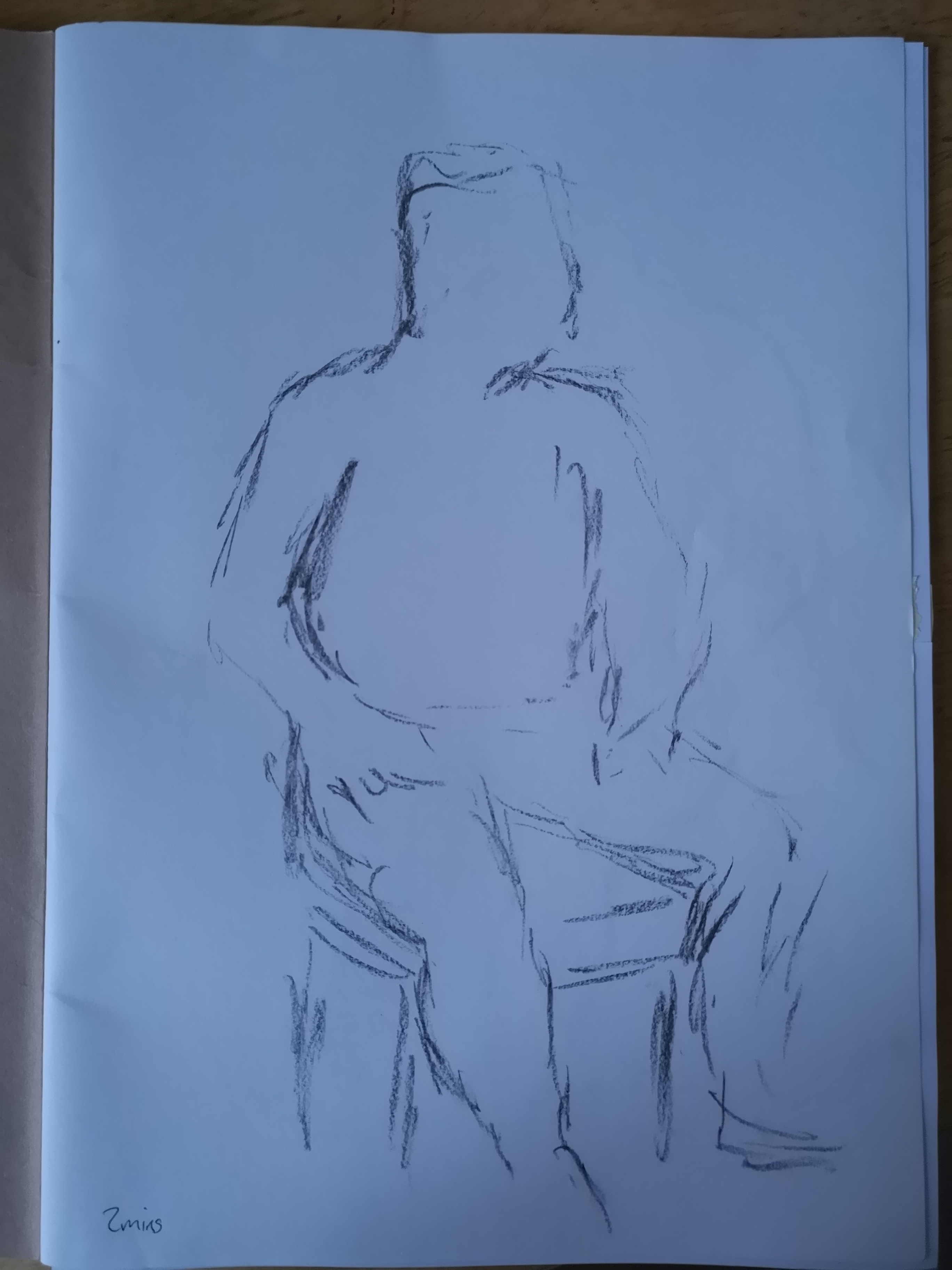
I asked my model to sit in loose fitting clothes on a chair in a position he was most comfortable with and I tried my best to stick to the brief for the exercise, that is to just concentrate on the outline of the clothes around the body, not worry too much about, head feet and hands and to then use lines and marks to indicate how the clothes sit around the body, giving a sense of the body within.

I found this quite straight forward as I seemed to get proportions right more or less first time and I didn’t have to worry about the detail of the more difficult features.

Please see my sketch below.

dav

Drawing Skills 1: Pt 4; Project 1 Fabric and form – Ex 1 – Drawing fabric using line and tone

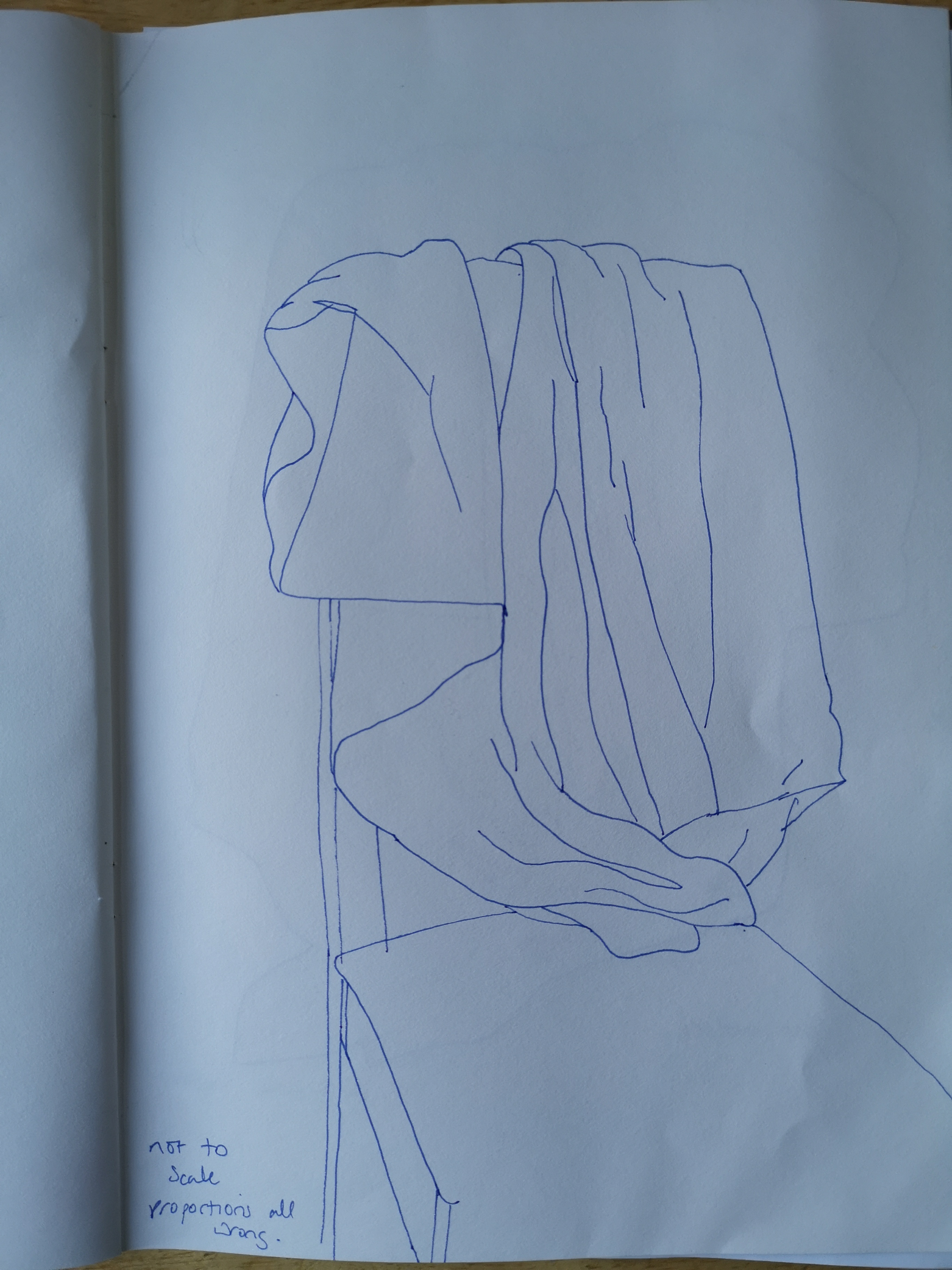
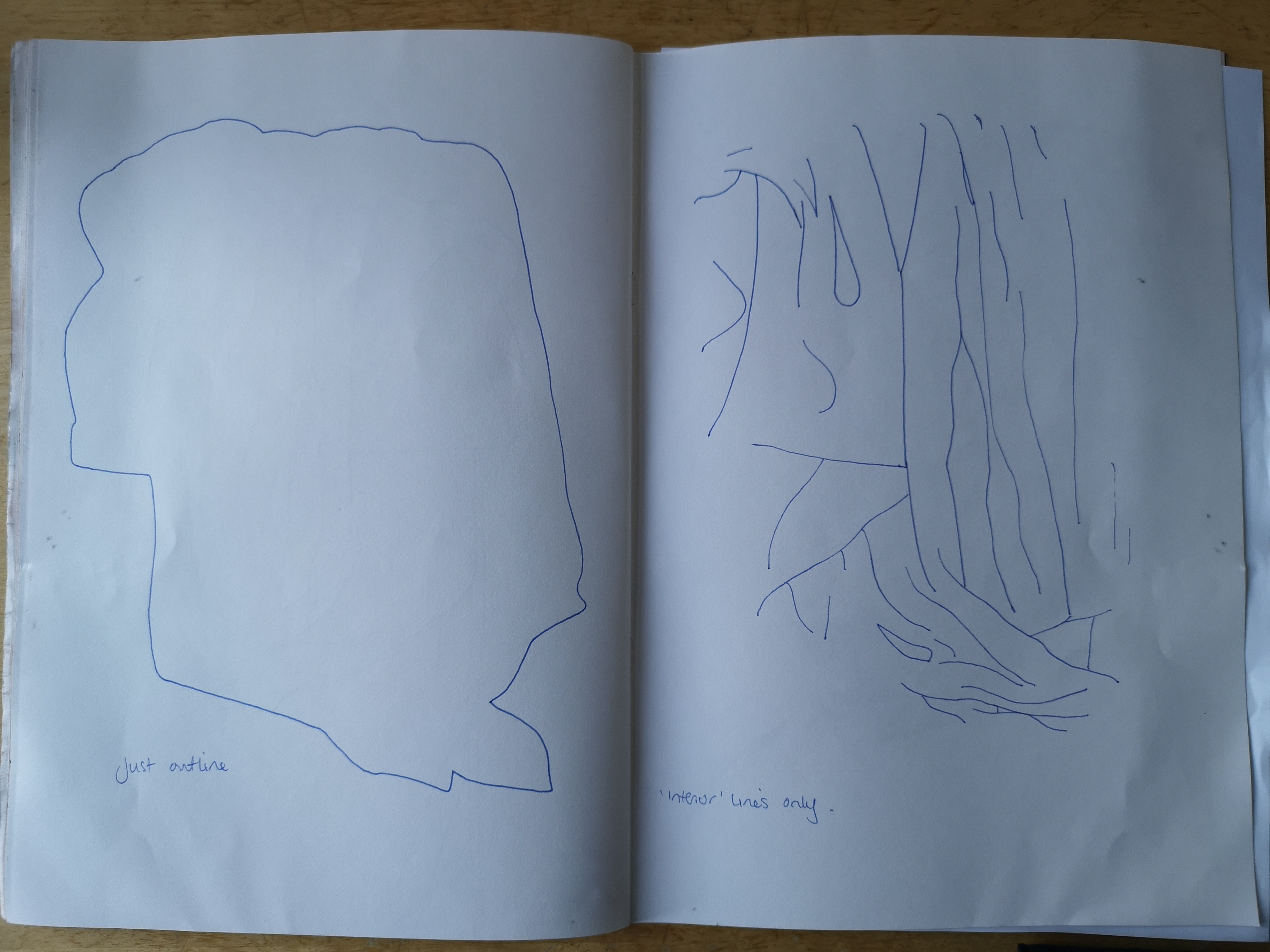
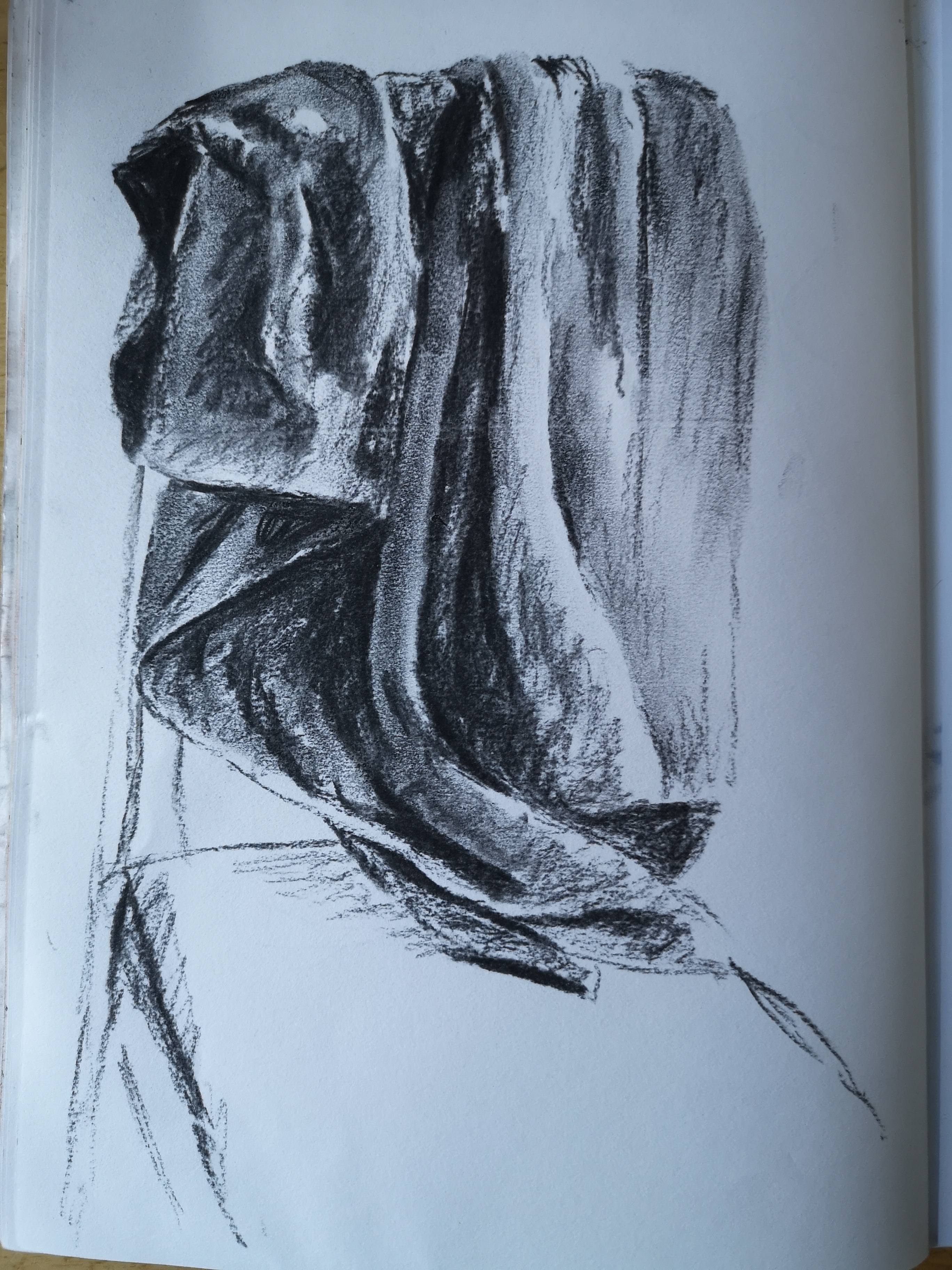
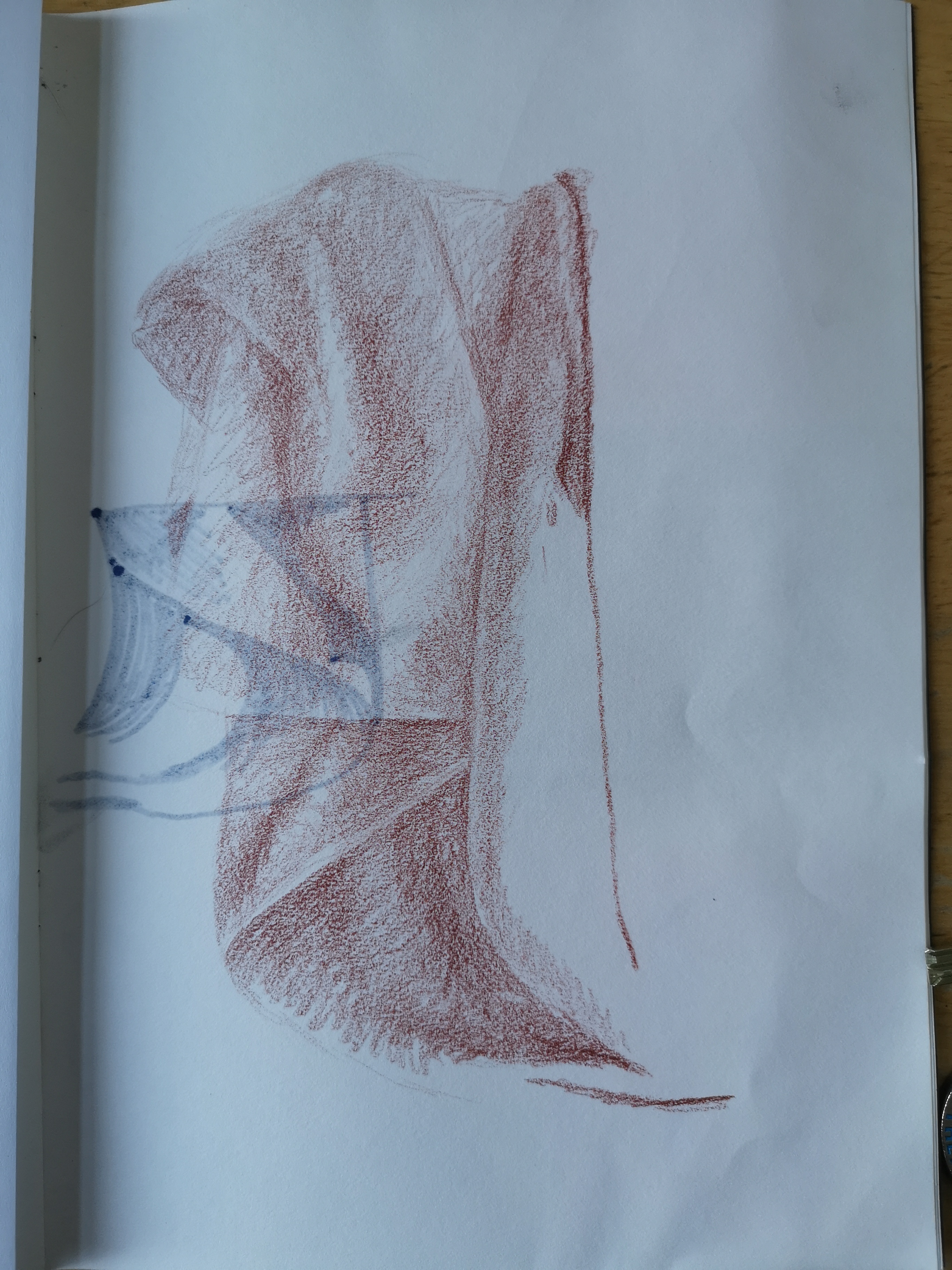
I used a towel over the back of a chair for this exercise. I first did some line drawings using pen. The first was quite out of proportion but is not obvious in the image. I decided to then just draw the outline of the towel and then to just do the lines of the folds and creases as separate drawings. I think its interesting because both I think gave some sense of the object and folds without all the information.

I found it quite easy to create a sense of fabric overall, but it was much easier when using tone as this allowed for more shading and I was able to better describe the weight of the fabric. Unfortunately the second tonal drawing was spoiled by my work with pen on the reverse but I enjoyed working with pencil most,  although got carried away so was only able to complete half an image in the suggested 15 minutes.

CE1590F6-1B74-48B8-90B6-F7EC2FB01BB0.jpeg


A85339CE-6799-4F54-9DCA-F5F12108AE55.jpeg

3DA30C9C-7148-4BDE-AF08-60F51AEBFF40

442A0D97-29AB-46B0-B753-A7E5CB8294AC.jpeg

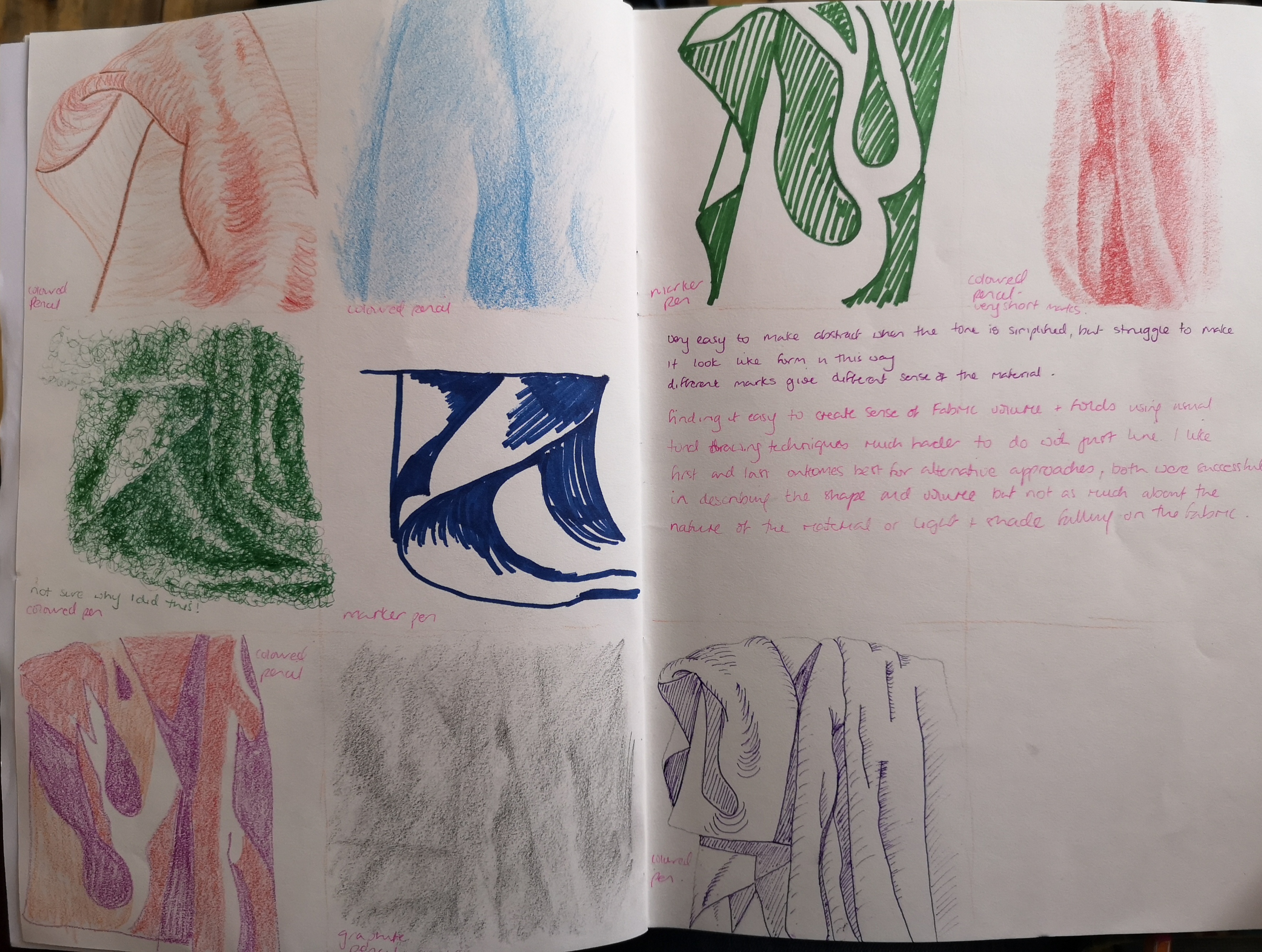
Next I divided 2 pages of my A4 sketch book into rough squares and experimented a bit with different media and different approaches to draw parts of teh fabric with line and tone. I tried to be as loose as possible with this and just do whatever came into my head just to see what happened. In particular I tried different ways to simplify the tone by using block shapes and colours but think I had very limited success. The image usually looked quite abstract. In my last attempt I drew a bigger section of the fabric and used lines to suggest areas of tone in a very simplified way which had a better outcome.

See image below.

F77A769C-1541-4593-808F-8D50DFACD7B2.jpeg

I found it easy to create a sense of fabric volume and folds using usual tonal drawing techniques, but found it much harder to do this with just line. I like the first and last drawings best for alternative approaches using just line, I think both were successful in describing the shape and volume, but not so at the nature of the material or light and shade falling on the fabric.


Drawing Skills 1: Pt 3; Reflection and additional exercises following Tutor feedback

Feedback was positive overall.I prepared myself better this time by going back over my blog before the meeting and was able to recap on some of the challenges I’d faced and to review what I’d learned particularly through research of other artists. This was very helpful for me as I hadn’t really enjoyed this part – landscapes are not my thing so I felt I’d gained nothing but going back through my work actually helped me realise what I had gained from it and was therefore a positive experience in itself.

When it came to my tutorial my tutor and I talked about my difficulty with this genre despite my love of landscape. I was encouraged to hold onto this, it may well surface in another way at another time, I need to remind myself I’m just at the beginning of my learning pathway!

As well as other parts of my work, we discussed my assignment piece, although not my best work on the whole it was ok so no real changes advised as what I had accomplished may be lost. Instead my tutor encouraged me to use the opportunity to do 3 quick sketch responses to the subject, with the aim of loosening up and freeing my approach.

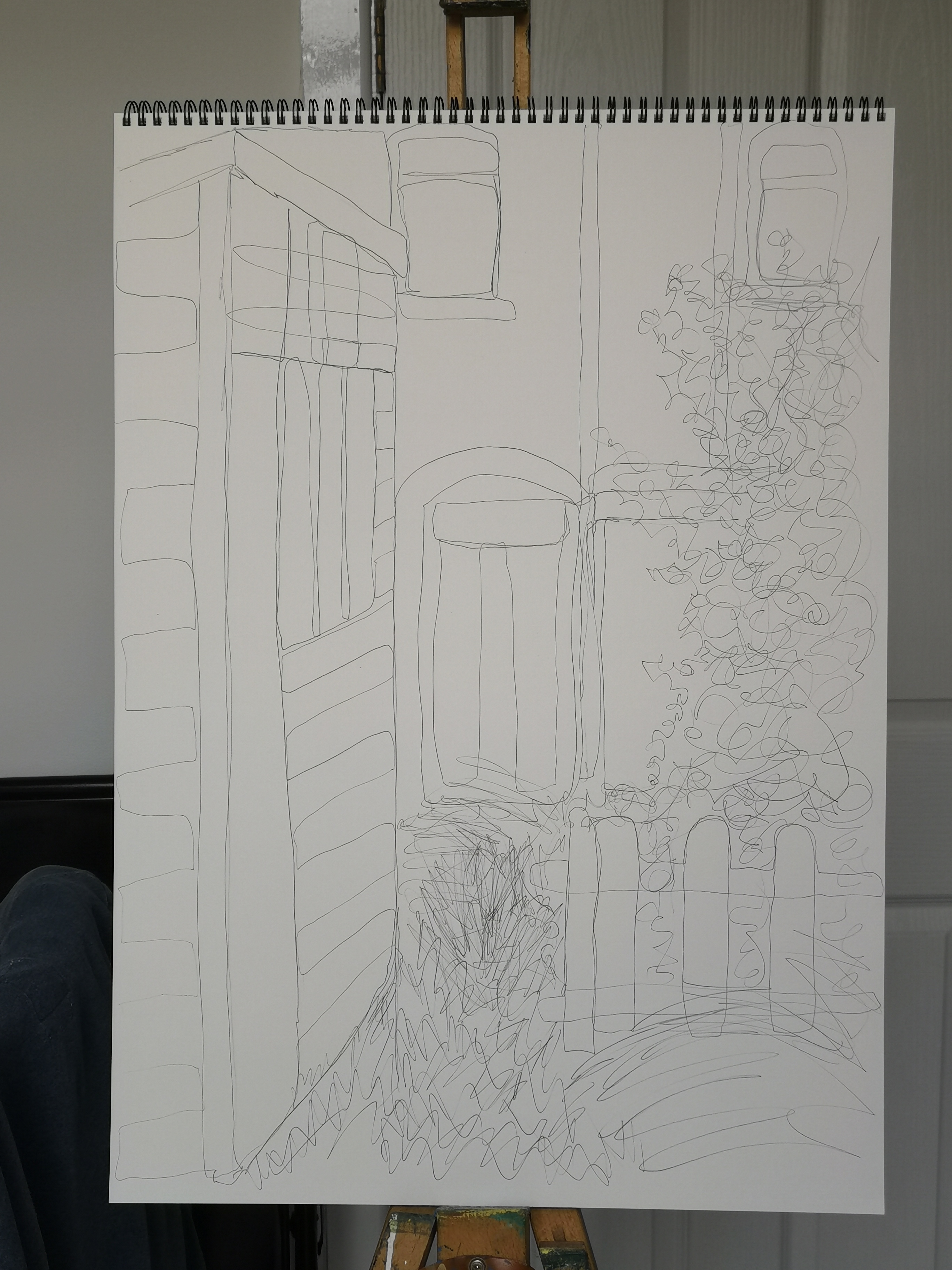
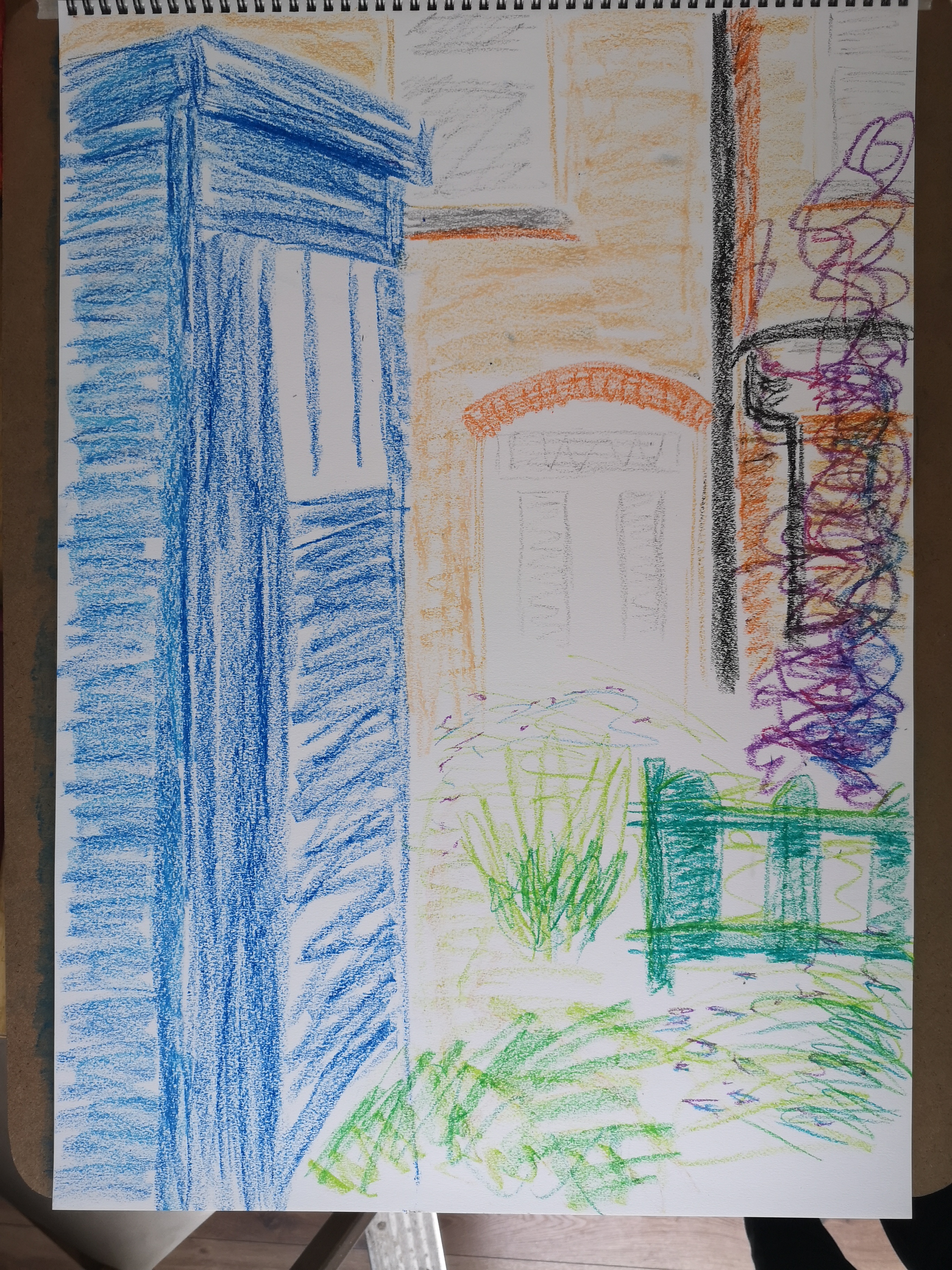
She advised that I do three 15 minute sketches of the same size and subject as my assignment:

1 – live drawing, using very wet and large bold painterly strokes

2 – live drawing using continuous line with a ball point pen

3 – to be completed from memory given that I have and intimate connection with the view

She suggested that i should not worry too much about the outcomes, they may have many flaws or errors, but that I may pick up something from each that I like which I can take forward for future practice.

The results are below.
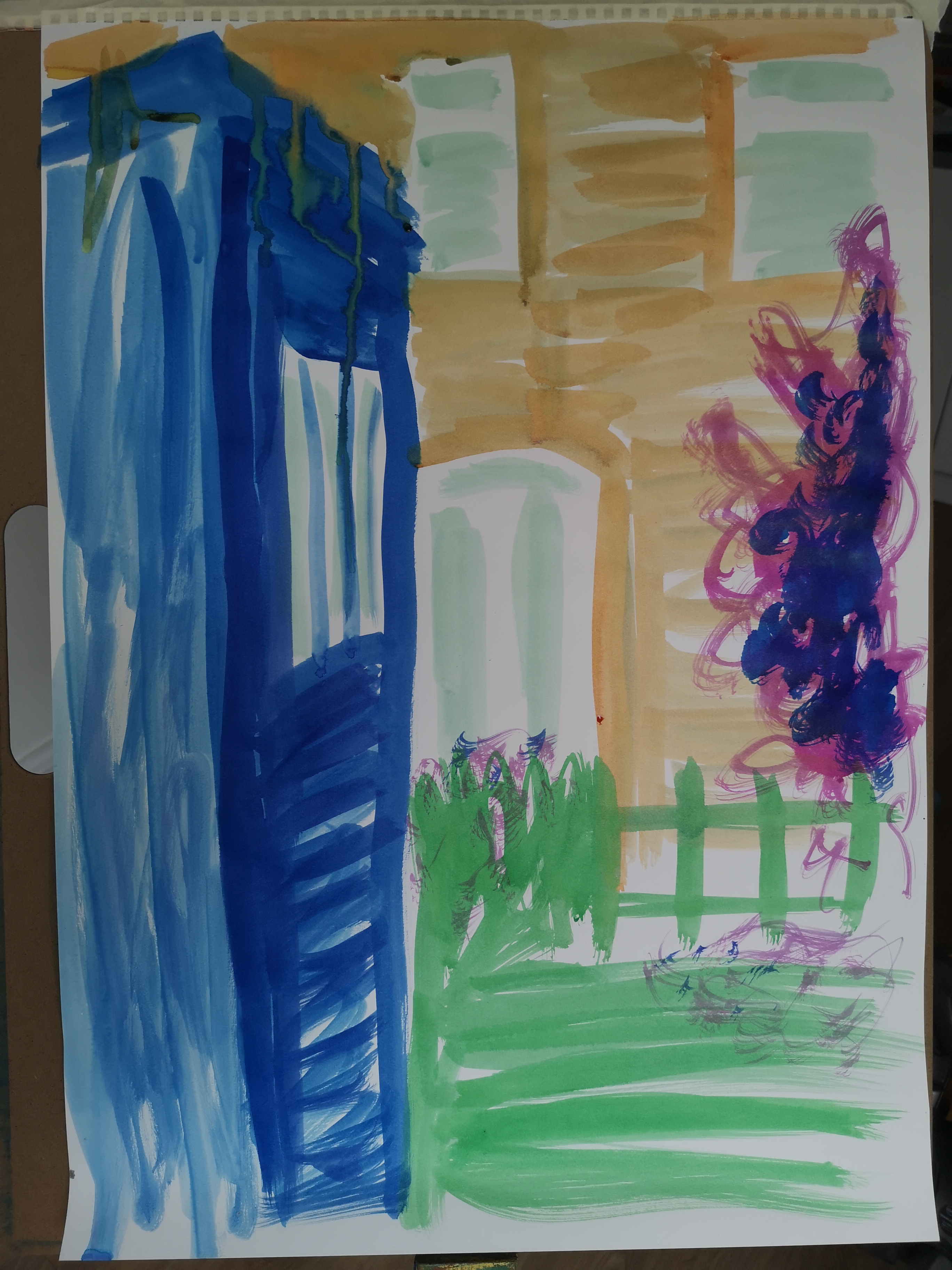
68F9FE5A-12D7-4082-BF00-4D283CA33B3E

Ink on paper

F6571491-7208-4E3D-A4A4-81D7E526428F

Ball point pen on paper

dav

Oil pastel on paper.

I worked much quicker than I anticipated, I did not realise that 15 minutes is actually quite a long time. However it was only after completing all three and reviewing them that I realised despite drawing the first 2 outside, they had all been drawn from memory. I had hardly raised my gaze from the paper!

In terms of outcome, I liked the first 2 best, not so much the oil pastel, but I’m not sure if this is just because of the texture that it gave. I really am pleased with the way I worked, I just got on and let myself go. It’s interesting that the marks are much more purposeful than I expected, the lines are bolder and sometimes straighter than they were with my assignment piece. With the ink I was very surprised as I am so anxious about how much ink I put on the brush and then onto paper, I always want to water down, but in the end I was more or less going direct from the bottle and realised that I could just go over again to emphasise the marks.

I found the continuous line drawing to be hardest as I was hesitant about working across the page, so I often had to retrace my line to get to another part of the picture. However, I like how the finished image looks, even though it is also quite wobbly looking.

I also noticed with all three that my main focus was on the structures and buildings, and that the shrubbery was almost an afterthought, I didn’t put anywhere near as much effort into this and in all three it occupies a much smaller space apart from the tree on the right. On reflection I think I was biased towards the tree because I always catch myself looking at it when I look out onto my garden. The colours within it always make me stop and look – it is quite green in its heart and then has a lovely deep purple colour extending out which is also tinged with deep red, auburn and burnt orange depending on the amount of light coming through. When the wind blows through the leaves they look like sequins as they flicker and all the colours are shown. I think I’ve always wanted to draw that tree but never before gave myself a reason to.

I really enjoyed the exercises, even if I did them a bit wrong, because they helped me to see what could be done without caring too much, which is something I need to do more of. I think it was a bit like the warm up exercises in part 1, a good way of getting the creative juices flowing – like doodling but a bit more structured. Its also helped to give me a few more techniques to consider for future projects.


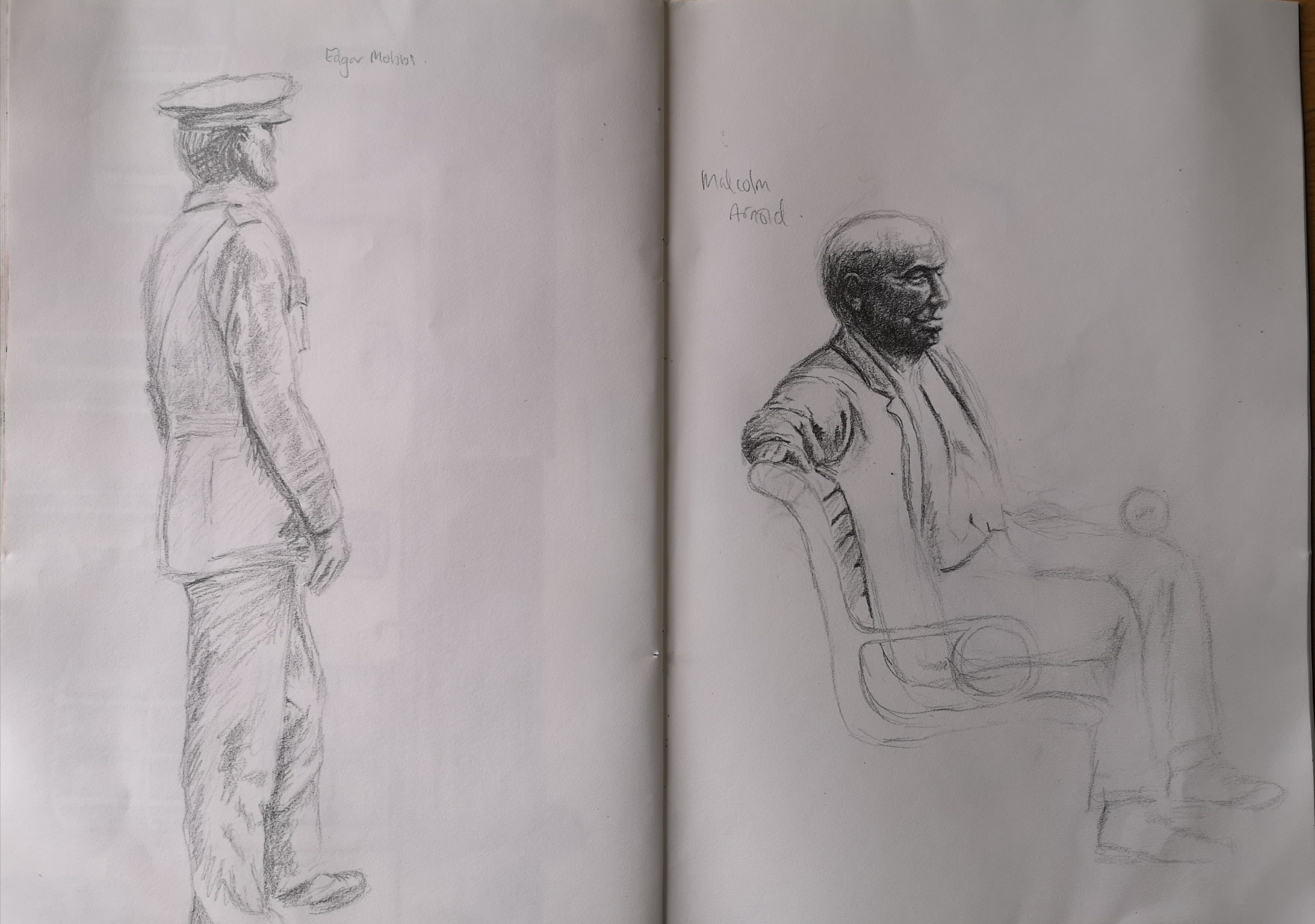
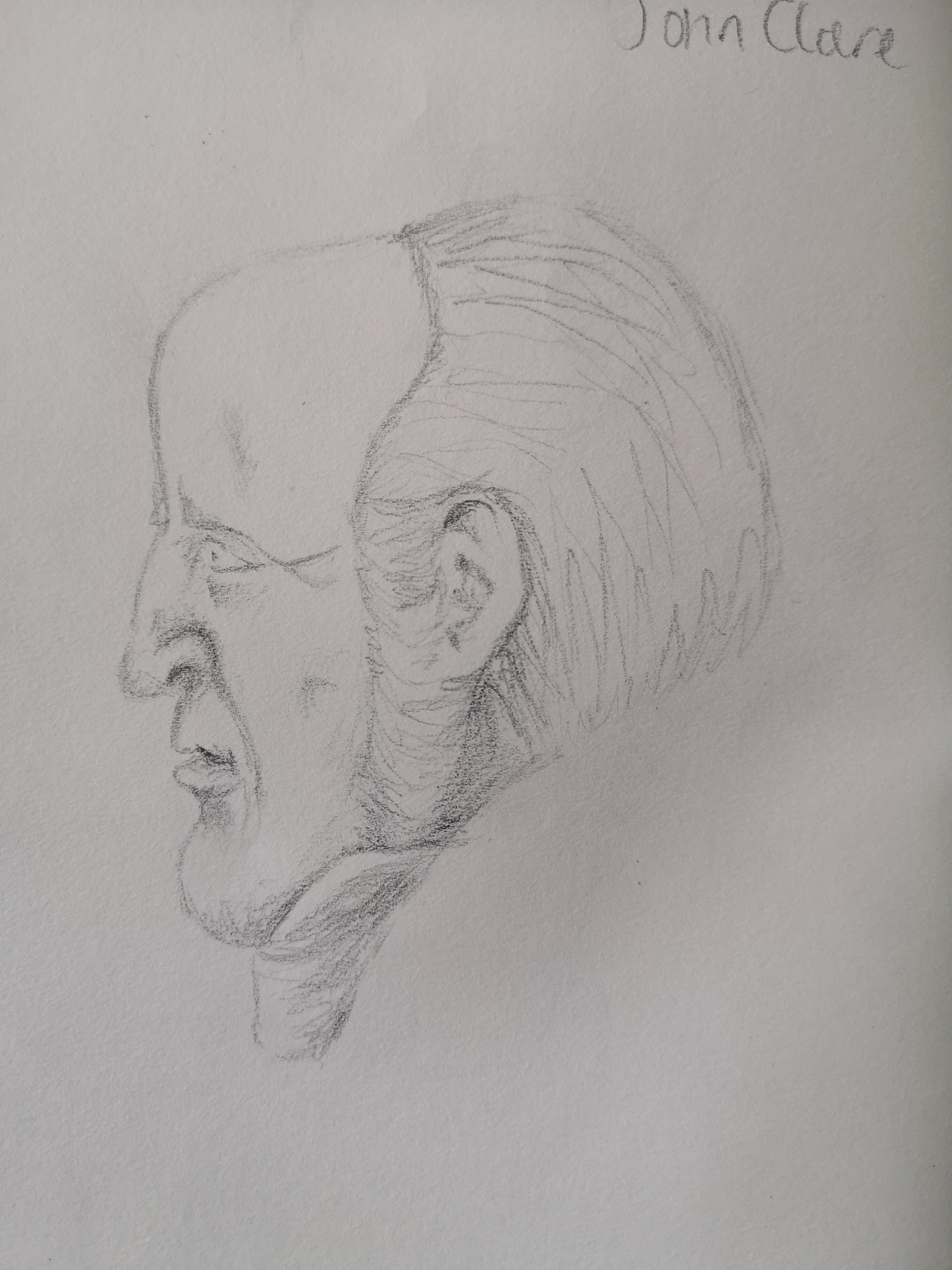
Drawing Skills 1: Pt 3; Project 5 Townscapes – Ex 4 – Statues

I did the majority of this exercise in direct observation of the statues and then completed some additional detail at home as I had forgotten to take my glasses with me!

I really enjoyed it as I love drawing people so felt completely in my comfort zone. I particularly enjoyed looking closely at the detail of the faces and tried as well to do some foreshortening with a little success.

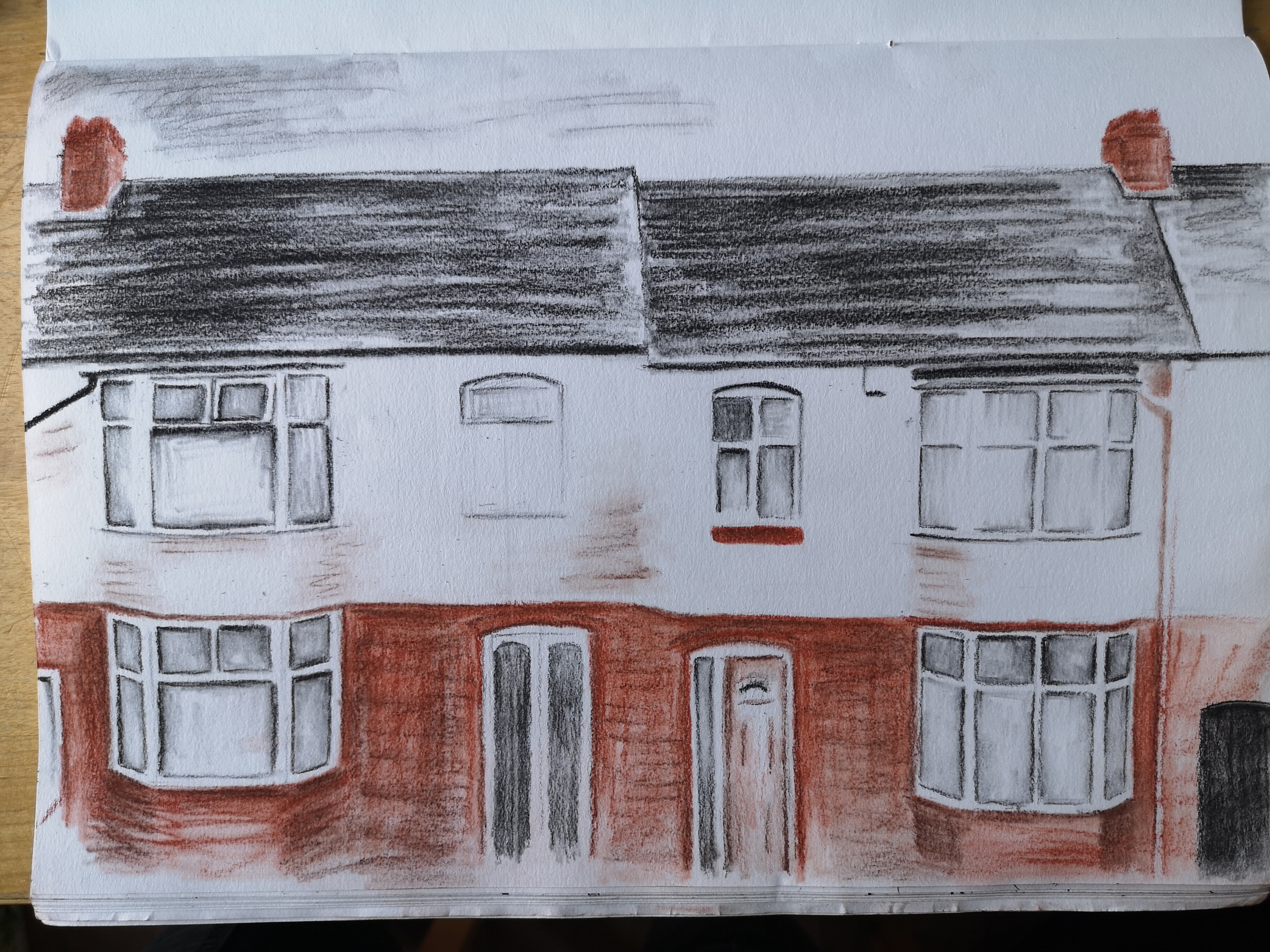
Drawing Skills 1: Pt 3; Project 5 Townscapes – Ex 3 – A limited palette study

To be honest I have been trying to speed through these last few ‘townscape’ exercises, because I have a deadline to meet and want to give myself plenty of time to complete my assignment. This meant that when I approached this exercise, I really was not in the mood and felt like I had no creative bones in my body. The result, is therefore quite poor.

I used conte pencils – sanguine, dark brown and black. I thought, despite my lack of enthusiasm, that I was doing ok initially and tried to concentrate on the main areas of shade and form in the image rather than minute details. However, when I had finished it looked very rushed (which it was), and much of it is out of proportion. I will have to complete this again, but think it would be best done as part of my assignment to help give me better focus.